





Gandhi's Lonely Vigil in Calcutta
While New Delhi erupted in celebration, Mahatma Gandhi was in Calcutta (now Kolkata), trying to quell the flames of communal riots. He spent August 15 fasting and holding prayer meetings in a dilapidated mansion in a riot-torn area, believing that healing
the divide between Hindus and Muslims was more important than celebrating political freedom. His presence was a powerful statement that for him, independence was meaningless without unity and peace.
The Secret of the Radcliffe Line
The border between India and Pakistan was drawn by a British lawyer, Sir Cyril Radcliffe, who had never set foot in India before July 1947. Given just five weeks, he carved up provinces based on outdated maps and census data. Crucially, the final boundary lines were kept secret until August 17, two days after independence, leading to chaos, confusion, and unimaginable violence as millions found themselves on the wrong side of a border they never knew existed.
Nehru’s Midnight Address to a Room, Not a Nation
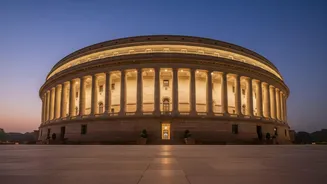
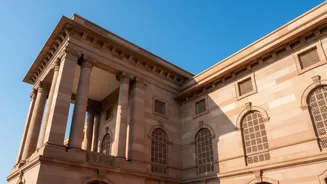
Jawaharlal Nehru's iconic 'Tryst with Destiny' speech was not a public address but was delivered to the Constituent Assembly inside the parliament building at midnight. While All India Radio broadcast it to the nation, the profound words about India awakening to “life and freedom” were first heard by the elected representatives tasked with building the new nation. It was a pledge made by the new leaders to the people they would now serve.
Bismillah Khan’s Shehnai at the Red Fort
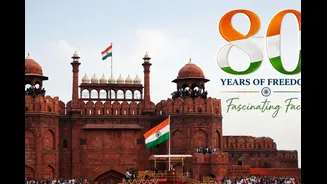
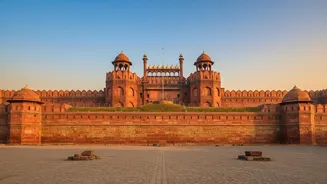
On the morning of August 15, 1947, before Nehru hoisted the tricolour at the Red Fort, the air was filled with the auspicious notes of the shehnai. Ustad Bismillah Khan was personally invited by Nehru to perform, becoming the first Indian to greet the independent nation with his music. His rendition of Raag Kaafi from the ramparts of the fort became a poignant and enduring symbol of India’s new dawn.
The Race to Unify 565 Princely States
Independence did not automatically mean a united India. Over 560 princely states, from large territories like Hyderabad to tiny estates, were given the choice to join India, Pakistan, or remain independent. Sardar Vallabhbhai Patel, along with his secretary V.P. Menon, embarked on a monumental diplomatic mission. Through persuasion, negotiation, and sometimes firm pressure, they convinced the vast majority of rulers to accede to India by August 15, preventing the nation's fragmentation.
The Poet Who Gave Voice to Partition’s Pain
As millions suffered, Punjabi poet Amrita Pritam penned an anguished elegy, 'Ajj Aakhaan Waris Shah Nu' (Today I Invoke Waris Shah). Fleeing from Lahore to Delhi as a refugee, she channelled her grief into a poem addressed to the 18th-century Sufi poet Waris Shah, imploring him to rise from his grave and witness the horrific tragedy that had befallen the daughters of Punjab. The poem became one of the most powerful literary expressions of Partition's sorrow.
The Women Who Forged a Nation
Amidst the political turmoil, 15 women were part of the Constituent Assembly, actively shaping the foundational document of the new India. While the constitution would be adopted later, their presence in the Assembly during the transfer of power in August 1947 was a significant milestone. Figures like Hansa Mehta, Dakshayani Velayudhan, and Begum Aizaz Rasul were instrumental in debates, advocating for social justice, minority rights, and gender equality in a free India.
A Philosopher’s Hopeful Radio Message
On the eve of independence, All India Radio broadcast a message from the philosopher and mystic Sri Aurobindo from his ashram in Pondicherry. He called August 15 not just the birthday of a free India but a pivotal moment for all of Asia and the world. Coincidentally, it was also his own birthday, a fact he saw as a divine sanction. His message outlined a vision for India’s spiritual leadership in a new global age.
The First Broadcast of Freedom
For millions across the subcontinent, the first news of freedom came not from a screen but through the crackle of a radio set. All India Radio (AIR) played a historic role, broadcasting the proceedings from the Constituent Assembly live. For the first time, people in distant towns and villages could hear the voices of their new leaders and the declaration of independence as it happened, making AIR the true electronic heartbeat of a newborn nation.
The Agony of the First Refugees
The joy of independence was tragically mirrored by the largest forced migration in human history. In August 1947, millions of Hindus, Muslims, and Sikhs began a desperate journey across the newly drawn borders. Personal stories from this period are filled with horror but also incredible resilience—families separated forever, children orphaned, and survivors who carried the trauma for the rest of their lives, embodying the immense human cost of freedom.