



When Answers Are Everywhere, Questions Are Key
For generations, education and professional value have been built on having the right answers. Knowing a specific formula, recalling a historical date, or executing a known process was the hallmark of expertise. But in a world where AI can provide comprehensive
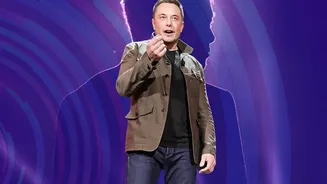
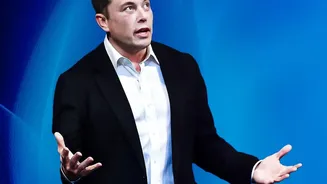
answers to complex questions in seconds, Elon Musk argues that the script is flipping. The true value is shifting from the answer to the question that elicits it. According to recent remarks, Musk believes that as AI handles more of the 'what' and 'how,' the indispensable human skill will be defining the 'why'. This involves not just asking a question, but framing a problem, challenging assumptions, and identifying the most crucial query to pursue. The skill is no longer information retrieval but insightful inquiry.
The Resurgence of the Generalist
This emphasis on inquiry leads directly to Musk's second major point: the rising importance of a broad, general education. For decades, the path to success was seen as deep specialization. Musk now argues the opposite, recommending that young people pursue learning across diverse fields like the arts, sciences, and engineering. His reasoning is that to ask a truly great question, you need a wide base of knowledge to draw from. A person who understands only one narrow field may know how to build something, but someone with a grasp of history, psychology, and economics can ask whether it should be built. This 'expert generalist' approach allows for connecting disparate ideas, spotting unseen opportunities, and providing the context that a purely logical AI might lack. It’s about building a mental 'semantic tree' with strong roots in fundamental principles, allowing new details to find a place to hang.
Becoming the Conductor of the AI Orchestra
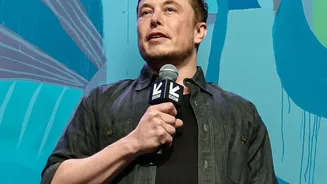
Combining these two ideas—better questions and broad knowledge—creates a new role for humans: the director of technology. In remarks made during an interview with China Media Group, Musk explained that in order to know what to ask of future robots and AI, you first need to be able to formulate the question clearly. He likens this to a more advanced form of 'prompt engineering,' where the goal is to communicate a desired outcome to a highly capable machine. Imagine an orchestra of incredibly talented AI musicians; they can play any note perfectly, but they still need a conductor to choose the music, set the tempo, and bring the performance to life. That conductor needs a broad appreciation of music (general knowledge) and the ability to give precise instructions (asking good questions). This is the future Musk envisions for human-AI collaboration. Humans won't be replaced, but their roles will evolve from laborers to visionaries and guides.
Rethinking Our Approach to Work and Learning
Musk's perspective suggests a fundamental shift in how we should approach education and career development. The focus moves away from rote memorization and towards cultivating curiosity, critical thinking, and a passion for lifelong, cross-disciplinary learning. While specialized skills in fields like medicine or engineering will remain crucial, Musk’s argument is that their impact will be magnified when paired with a generalist's perspective. This doesn't mean everyone needs to be a polymath, but it does imply that the ability to think flexibly and adaptively will be a significant advantage. As AI and automation take over more routine and rule-based tasks, the uniquely human capacity for creative problem-framing, ethical judgment, and synthesis of ideas becomes our primary economic contribution. The future of work may be less about what you know and more about what you are curious enough to find out.