






A New Model for the Moon
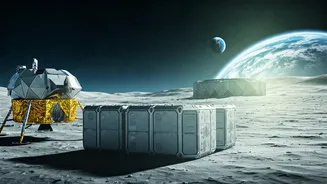
Forget the top-down, government-run model of the Apollo era. NASA’s modern lunar strategy revolves around the Commercial Lunar Payload Services (CLPS) initiative. Under this program, instead of owning and operating all the hardware itself, NASA buys a delivery
service from private companies. These firms are responsible for building the landers, securing the launch, and getting NASA's scientific instruments to the lunar surface. The goal is to create a robust commercial marketplace between Earth and the Moon, driving down costs and increasing the frequency of missions. NASA's leadership believes that allowing companies to compete on cost and innovation will enable the agency to do more than ever before. It’s a fundamental shift, treating the journey to the Moon less like a singular national project and more like building a sustainable commercial logistics network.
A Tale of Two Landers
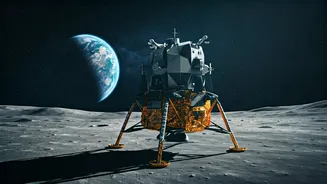
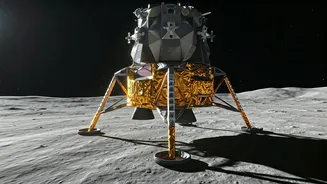
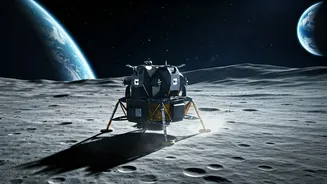
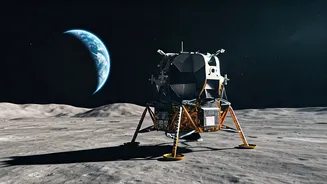
The CLPS program's high-risk, high-reward nature was on full display in early 2024. First, Astrobotic’s Peregrine lander suffered a critical propellant leak shortly after launch in January. A stuck valve caused a tank to rupture, making a lunar landing impossible, and the craft ultimately burned up in Earth's atmosphere. It was a stark reminder that landing on the Moon is incredibly difficult. Just a month later, however, the script flipped. Intuitive Machines' Odysseus lander successfully touched down near the Moon's south pole, becoming the first private spacecraft to achieve a soft lunar landing and the first American vehicle to do so since 1972. While Odysseus tipped over upon landing, it remained operational and transmitted valuable data. This mixed success perfectly illustrates the reality of NASA's bet: some missions will fail, but each attempt, successful or not, provides crucial data and experience.
Doubling Down on the Strategy
Despite the mixed results, NASA is forging ahead. On June 30, 2026, the agency announced nearly $600 million in new contracts for four more robotic missions to the Moon by late 2028. Astrobotic, the company whose first mission failed, received the largest award at $297.9 million for two future landings. Intuitive Machines and another company, Firefly Aerospace, also received contracts for one mission each. Firefly is notably the only company to have achieved a fully successful, upright landing so far. NASA's rationale is that increasing the frequency of missions allows for faster learning and refinement. This approach intentionally accepts a higher level of risk, viewing occasional failures as a necessary cost of accelerating progress and building a sustainable commercial presence on the Moon.
The Ultimate Gamble: Starship
The biggest bet of all rests on SpaceX's Starship, the colossal, next-generation rocket selected by NASA to land the first astronauts on the Moon under the Artemis program since the Apollo missions. Starship is essential not just for carrying cargo, but for the Human Landing System (HLS) itself. However, its development has been a dramatic public spectacle of rapid, iterative testing, including multiple explosive mishaps before achieving recent successful test flights. The vehicle has yet to perform several critical maneuvers required for a lunar mission, such as in-space refueling, which is planned for a 2026 test. The pressure is immense, as NASA's timeline for returning humans to the lunar surface in 2028 depends entirely on Starship's readiness. This makes SpaceX's progress the most critical and closely watched element of NASA's entire lunar architecture.