








A Tool for the Learned and Wealthy
The story begins in 13th-century Italy, where the first wearable eyeglasses were invented. These early spectacles were simple, often made of bone, metal, or leather holding two magnifying lenses that perched on the nose. They were a godsend for aging
monks and scholars, whose work involved deciphering manuscripts in dimly lit monasteries. This association with knowledge immediately gave eyewear an air of prestige. In a world where literacy was rare, the ability to continue reading and writing past one's prime was a superpower. As a result, early spectacles were less a medical device and more a symbol of wisdom and elite social standing, appearing in Renaissance paintings to denote the intellect of the subject. They were expensive and rare, a clear signal of the wearer's wealth and scholarly pursuits.
The Age of Print and New Designs
The invention of the printing press in the 15th century dramatically increased the availability of books and, consequently, the demand for eyeglasses. As literacy spread, so did the need for vision correction. Yet, eyewear remained more than just functional. During the 16th and 17th centuries, frames became more ornate, crafted from materials like tortoiseshell and precious metals. This era also saw experimentation with different forms. Handheld options like the lorgnette, which could be elegantly raised to the eyes, became popular among fashionable women. The monocle also emerged, favored by aristocratic men well into the 20th century as a stylish alternative. These designs weren't just about seeing; they were about being seen, turning the act of looking into a performance of sophistication.
The Dawn of Fashion Eyewear
The 20th century is when eyewear truly came into its own as a fashion accessory. The turning point arrived in the 1920s, when Hollywood stars began to sport stylish frames on and off screen. Comedian Harold Lloyd, for instance, made round tortoiseshell glasses his signature, using them to craft a recognizable character. This planted the seed for glasses as an element of persona. The development of plastics after World War II made frames lighter, cheaper, and available in a rainbow of colors, opening the floodgates for experimentation. The 1950s gave us two of the most enduring styles: the glamorous cat-eye, championed by icons like Marilyn Monroe and Audrey Hepburn, and the sturdy, masculine Wayfarer from Ray-Ban.
From Geek to Chic
The latter half of the century saw eyewear become even more audacious. The 1960s and '70s were defined by oversized frames, with figures like Jackie Kennedy making large sunglasses the epitome of glamour. This was an era of individuality, where glasses were used to make a statement. By the 1980s, designer-branded eyewear from names like Gucci became status symbols in their own right, and pop stars like Elton John turned extravagant frames into a core part of their stage identity. What was once a subtle indicator of infirmity or intellectualism was now loud, proud, and deeply personal. The stereotype of the 'geek' began to fade, replaced by the idea of glasses as a 'look'.
The Ultimate Form of Self-Expression
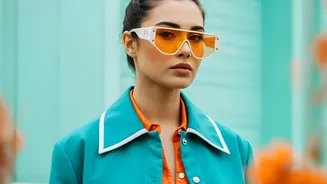
Today, eyewear is arguably the most prominent accessory for self-expression. It sits on your face, shaping how you see the world and how the world sees you. The market is filled with endless styles, from vintage revivals to futuristic designs, allowing people to curate their identity with precision. Many people now own multiple pairs, not for different prescriptions, but for different moods, outfits, and occasions. Some even wear non-prescription frames purely for the aesthetic. This evolution completes a long journey: from a crude tool balanced on a scholar’s nose to a powerful piece of personal branding. Eyewear has proven that it was never merely practical; it was always a frame for our identity.