






The Festival of Devotion
Every year, on the fourth day after the full moon in the Hindu month of Kartik, millions of married women across India observe the fast of Karwa Chauth. From sunrise until the moon appears, they abstain from food and water, praying for the longevity and well-being
of their husbands. While the day is marked by beautiful attire, henna-adorned hands, and community gatherings, its spiritual heart lies in the stories, or 'kathas', that are recited in the evening. These tales provide context and meaning to the strict observance, and none is more central than the legend of Queen Veeravati.
A Queen's First Fast
The story begins with the beautiful Queen Veeravati, the cherished only sister of seven loving brothers. During her first Karwa Chauth after marriage, she was visiting her parents' home and undertook the rigorous fast. As the day wore on, she grew weak with hunger and thirst, eagerly awaiting the moonrise to break her fast. Her brothers, unable to bear seeing their beloved sister suffer, hatched a plan. They created an illusion of the moon, either by holding a mirror behind a Pipal tree or by lighting a fire on a distant hill, and convinced Veeravati that the time had come to eat.
The Tragic Consequence
Trusting her brothers, Veeravati broke her fast. The moment she took her first bite of food, ill omens began. Some tellings say she sneezed, while others recount her finding a strand of hair in her food. Almost immediately, the devastating news arrived: her husband, the king, was dead. Heartbroken and inconsolable, the queen began the journey back to her husband's kingdom. Her premature breaking of the fast, even though unintentional, had led to this tragedy.
A Divine Intervention and Penance
On her way, weeping, Veeravati encountered Goddess Parvati (or in some versions, was visited by the goddess). Parvati explained the situation: her husband's life was lost because she had broken her fast before the true moonrise. Taking pity on the repentant queen, the goddess offered a path to redemption. She instructed Veeravati to observe the fast again, this time with complete and unwavering devotion. Some versions of the legend say she had to perform penance for a full year, painstakingly removing needles from her husband's body until only one remained on the next Karwa Chauth. Other accounts focus on her repeating the fast with perfect adherence to the rituals.
Redemption Through Faith
Veeravati's profound devotion and her strict adherence to the fast as instructed by Goddess Parvati paid off. Seeing her dedication, Yama, the god of death, was compelled to restore her husband's life. The queen's faith had overcome the consequences of the earlier deception. This powerful climax underscores the story's central themes: the immense power of a devoted wife's prayer, the importance of patience, and the idea that true faith can conquer even death. The legend serves as a lesson that rituals must be performed with sincerity and discipline.
From Legend to Living Ritual
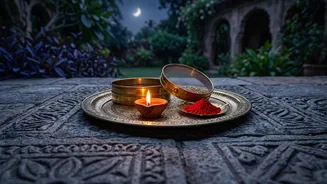
The story of Veeravati is not just a tale; it's a living part of the Karwa Chauth celebration. It explains why the fast is broken only after the moon is sighted, and it adds a layer of solemnity and purpose to the day's abstinence. The practice of looking at the moon through a sieve ('channi') before looking at one's husband is sometimes linked to Veeravati's story, symbolising the act of filtering out deception and seeing only the truth. By passing this story from mother-in-law to daughter-in-law and among friends, women reaffirm the cultural and spiritual foundations of the festival each year.