





The Core Concept
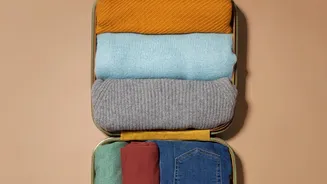
The 5-4-3-2-1 method is a packing guideline that turns the chaotic process of deciding what to bring into a simple checklist. The premise is to pack a specific number of items from different clothing categories, forcing you to choose versatile pieces
that can be mixed and matched. Instead of packing by specific outfits for each day, you pack a collection of items that work together in numerous combinations. This shift in mindset is the key to unlocking a lighter suitcase and a less stressful trip. The standard formula generally covers a week's worth of travel in a carry-on, but can be stretched for longer trips with access to laundry.
Five Tops
This is the foundation of your travel wardrobe. Your five tops should include a mix of T-shirts, blouses, or long-sleeved shirts that are appropriate for your destination. The secret to making this work is ensuring that each of your five tops can be worn with at least three or four of your chosen bottoms. Stick to a complementary colour palette—neutrals are a great base—and choose fabrics that can be dressed up or down. A simple, high-quality T-shirt can work for a day of sightseeing and be paired with a skirt or smarter trousers for the evening.
Four Bottoms
Next, you’ll select four bottoms. This could be any combination of trousers, jeans, shorts, or skirts, depending on your destination's climate and your planned activities. For a versatile trip, a good mix might include a pair of dark-wash jeans, a comfortable pair of travel trousers, a pair of shorts (or a skirt), and another option suited to your itinerary. Again, the goal is versatility. Each pair of bottoms should work with nearly all of your tops, creating a multitude of outfit possibilities from a small number of items.
Three 'Significant' Items
This category is often the most flexible and can be adapted to your specific needs. Most commonly, travel experts suggest dedicating this slot to three pairs of shoes. This is often the hardest category to pare down, as shoes are bulky. A practical trio could include one comfortable pair for walking, one dressier pair for evenings, and one activity-specific pair like sandals or trainers. Alternatively, you could interpret 'three' as two pairs of shoes and one versatile dress, or one pair of shoes, a blazer, and a dress. The key is to limit these space-consuming items to just three.
Two Layering Pieces
Weather is unpredictable, and even warm destinations can have cool evenings or aggressive air conditioning. This is where your two layering pieces come in. This could be a combination of a light jacket, a cardigan, a pullover sweater, or a stylish shawl. These items not only provide warmth but also add another dimension to your outfits, allowing you to create different looks. For men, this might be an overshirt and a light jacket. Choosing layers in neutral tones ensures they will coordinate with everything else you’ve packed.
One of Each Essential
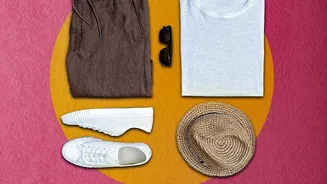
The 'one' in this formula usually refers to singular items that don't need duplicates. This typically includes one swimsuit, one hat, one belt, or one set of workout gear. Some interpretations also use this for one handbag or one special occasion outfit. Think of this as the category for your trip-specific necessities. You only need one hat, one pair of sunglasses, and one watch. This final number acts as a firm reminder to resist the urge to pack multiples of items you’ll only use once.
Adapting the Rule
The beauty of the 5-4-3-2-1 rule is its flexibility. It's a guideline, not a strict command. For a business trip, you might swap a pair of jeans for an extra pair of smart trousers. For a beach holiday, your 'bottoms' might be skewed towards shorts and your 'one' might be a cover-up. For longer trips, this list can serve as a base for a two-week journey if you plan to do laundry once. The goal isn't to follow the rule perfectly, but to use it as a tool to pack more intentionally and avoid the burden of an overstuffed bag.