






The Plan: Viability Gap Funding for AI
At the heart of the government's new strategy is the concept of Viability Gap Funding (VGF). This isn't a new idea in itself; VGF has been used to make large-scale infrastructure projects in sectors like transport and energy attractive to private companies.
Now, the government is looking to apply this model to a different kind of infrastructure: the vast, power-hungry compute capacity needed for advanced AI. The plan, part of the ambitious ₹10,372 crore IndiaAI Mission, involves the government subsidising a significant portion of the cost for private companies to build and operate this critical infrastructure. By shouldering part of the financial burden, the government makes these projects commercially viable for the private sector, accelerating the creation of a powerful, domestic AI ecosystem.
The Problem: The Soaring Cost of Compute
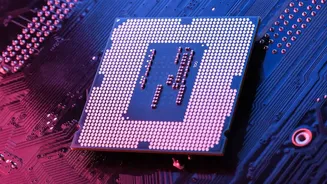
Developing advanced AI, especially large language models (LLMs) and other foundational models, requires immense computational power. This relies on thousands of specialised chips known as Graphics Processing Units (GPUs). Procuring and running these GPU clusters is extraordinarily expensive, with costs for a single training run potentially reaching billions of dollars by 2027. This high-cost barrier effectively locks out startups, researchers, and academic institutions, leaving the field dominated by a handful of global tech giants. The government's VGF strategy directly confronts this challenge. Instead of buying the hardware itself, it aims to de-risk the investment for private players, who would then create the capacity and offer it to users at a subsidised rate.
How It Would Work
Under the proposed public-private partnership (PPP) model, the government could fund up to 50% of the cost for creating the AI compute infrastructure. Private companies would bid to build and manage these GPU clusters. In return for the government's financial support, they would be required to offer this compute power to Indian startups, researchers, and public sector bodies at a reduced cost. Some officials have suggested prices could be as low as one-third of the current global market rate. This approach mirrors the success of other Indian public-private initiatives like the Unified Payments Interface (UPI), which combined government infrastructure with private innovation to revolutionise digital payments. The goal is to establish a robust network of 10,000 or more GPUs accessible through this subsidised model.
Beyond Funding: A National AI Fund
While VGF addresses the infrastructure cost, the government is also exploring another financial tool to fuel innovation directly. Recent discussions point towards a proposed National Frontier AI & Compute Fund (NFAICF), a dedicated investment vehicle with a potential anchor investment of ₹15,000–₹20,000 crore from the government. Structured as a SEBI-regulated Alternative Investment Fund, this would provide long-term risk capital—or patient capital—to Indian companies working on cutting-edge 'frontier AI'. This fund would address a critical gap, as traditional venture capital is often hesitant to back the long, expensive research and development cycles required to build foundational models from the ground up. Together, these two financial instruments represent a comprehensive strategy to both build the track and fund the race cars.
The Bigger Picture: Democratising AI
These financing tools are key pillars of the overarching IndiaAI Mission, which aims to 'Make AI in India and Make AI Work for India'. By lowering the cost of entry, the government hopes to democratise access to high-performance computing, fostering a wave of innovation from a wider pool of talent. The mission is not just about competing with global players; it is about building indigenous AI capabilities, creating models trained on Indian languages and data, and solving uniquely Indian challenges in sectors like healthcare, agriculture, and governance. This strategic push, combining infrastructure subsidies with direct startup funding, signals a clear intent to move India from being a consumer of AI technology to a significant producer and leader in the global AI landscape.