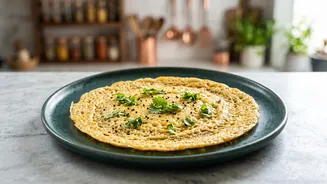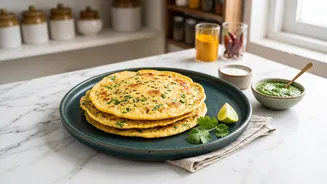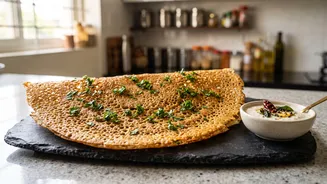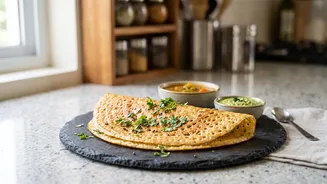


Crispy on the edges, protein-packed, and wonderfully versatile, the moong dal dosa is a South Indian classic for a reason. This guide will help you master this delicious and healthy crepe, from perfecting the batter to exploring exciting variations.
The Power of Moong Dal
Moong
dal, whether whole green gram or split yellow lentils, is a nutritional powerhouse. It's an excellent source of plant-based protein, dietary fibre, and essential nutrients like potassium, magnesium, and B vitamins. Unlike dosas made from rice and urad dal, which require a long fermentation, moong dal dosa can often be made almost instantly after soaking, making it a convenient choice for a quick and healthy meal. Its high protein and fibre content can help keep you full for longer, making it a great option for any meal of the day.
Mastering the Basic Batter: Pesarattu
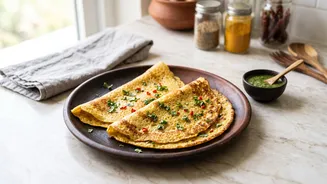
The most famous moong dal dosa is the Andhra classic, Pesarattu, made from whole green moong beans. The key to a great Pesarattu lies in the soaking and grinding. For a crispy dosa, it's crucial not to over-soak the dal; four to six hours is ideal. To make the batter, drain the soaked moong dal and transfer it to a blender. Add essential flavourings like fresh ginger, green chillies, and cumin seeds. Some recipes recommend adding a small amount of rice or rice flour to the batter to enhance crispiness, a common practice to achieve that perfect restaurant-style texture. Blend everything with just enough water to achieve a smooth, spreadable consistency, similar to a standard dosa batter. The batter can be used immediately as no fermentation is required.
Tips for the Perfect Crispy Dosa
Achieving that coveted crispy texture is an art, but a few tips can make it foolproof. First, ensure your batter consistency is right—it should be thick but pourable. If it’s too thick, you won't be able to spread it; if it's too watery, it won't crisp up. Heat your tawa (griddle) to a medium-high temperature. It should be hot enough that a sprinkle of water sizzles and evaporates immediately. Once hot, you can lightly grease it and wipe away any excess oil. Pour a ladle of batter onto the centre and quickly spread it outwards in a thin, even circle. Drizzle a little oil or ghee around the edges and cook on medium heat until the edges start to turn golden and lift from the pan.
Delicious Variations to Try
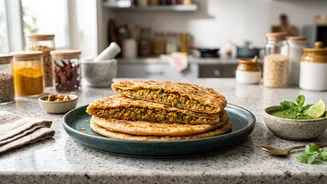
Once you've mastered the basic Pesarattu, the possibilities are endless. A popular and simple variation is to top the dosa with finely chopped onions while it cooks on the tawa. You can also add other toppings like grated carrots or finely chopped coriander leaves. For a more substantial meal, try making MLA Pesarattu, a famous version stuffed with a savoury semolina upma. This dish reportedly got its name from being a favourite in the canteens of the Member of Legislative Assembly quarters in Hyderabad. You can also experiment with the dal itself; dosas made with split yellow moong dal will be softer, while using sprouted moong beans will boost the nutritional value even further.
Ideal Pairings and Serving Suggestions
A great dosa is made even better by its accompaniments. The classic and most traditional pairing for Pesarattu is a spicy and tangy ginger chutney, known as Allam Pachadi in Telugu. The pungent heat of the ginger beautifully complements the earthy flavour of the moong dal. Other popular choices include coconut chutney, tomato chutney, or sambar. For a complete and satisfying meal, you can serve the dosa plain with a side of chutney or fill it with a spiced potato masala, similar to a traditional masala dosa. No matter how you serve it, moong dal dosa is best enjoyed hot and fresh off the tawa, when its crispiness is at its peak.