








What is Commercial Mission Design?
For decades, the path to space was singular: join the Indian Space Research Organisation (ISRO). But a new chapter is being written. The Indian government's 2020 reforms opened the doors for private companies, transforming the landscape. Commercial mission
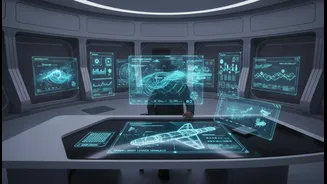
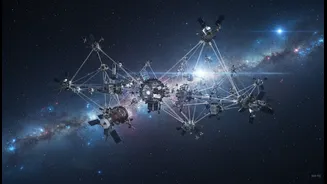
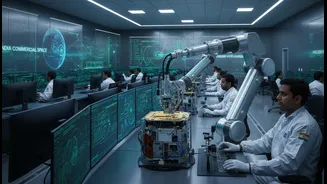
design is at the heart of this new era. Unlike traditional, science-focused government missions, commercial missions are built around a business case. This could mean designing a constellation of satellites for high-speed internet, launching vehicles for space tourism, deploying Earth-observation satellites for agriculture, or even planning for in-orbit manufacturing. A Mission Design Engineer, for instance, translates customer needs into a feasible space mission, performing orbital analysis, defining the sequence of events, and coordinating with various engineering teams to bring a commercial vision to life.
The New Players in India's Sky
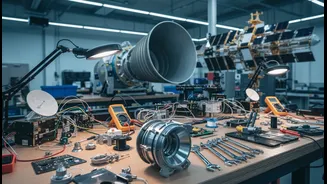
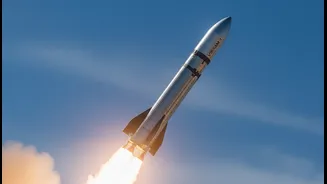
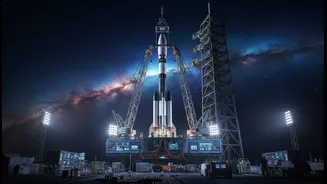
India's private space ecosystem is expanding rapidly, with over 400 startups registered by 2026. These companies are not just supporting ISRO; they are building their own rockets and satellites. Skyroot Aerospace made history by becoming the first private Indian company to launch a rocket into orbit with its Vikram-1 vehicle. Agnikul Cosmos is pioneering small satellite launches with its 3D-printed rocket engines. Meanwhile, companies like Pixxel are building constellations of hyperspectral satellites to provide detailed Earth observation data, and Dhruva Space offers full-stack satellite solutions. This commercial boom is supported by government bodies like IN-SPACe, which acts as a single-window agency to authorise and supervise private space activities, and NSIL, which commercialises ISRO's technologies.
The Skills You Need to Launch
A career in this new space age requires a blend of fundamental and modern skills. While a degree in Aerospace Engineering remains a strong foundation, the field is now wide open to talent from various disciplines. Strong fundamentals in physics, mathematics, and engineering (mechanical, electronics, software) are essential. Technical proficiency in areas like orbital mechanics, propulsion systems, structural analysis, and materials science is highly valued. However, software skills are becoming equally critical. Proficiency in programming languages like Python and C++ for automation and scripting, and experience with simulation software like STK (Systems Tool Kit) or GMAT for mission design and trajectory optimisation, are in high demand. Increasingly, expertise in artificial intelligence and data science is also sought after for analysing the vast amounts of data sent back from satellites.
Your Launchpad to a Space Career
The pathway to a commercial space career starts with a solid education. A bachelor's degree in aerospace, mechanical, electronics, or computer science engineering is a common starting point. Premier institutions like the IITs and the Indian Institute of Space Science and Technology (IIST) offer specialised programmes, with top IIST graduates often being absorbed directly into ISRO. But formal education is just one part. Internships with space-tech startups provide invaluable hands-on experience. Building a portfolio of projects, participating in design competitions, and networking at industry events can significantly boost your prospects. The industry also values multidisciplinary team players who possess strong problem-solving, communication, and collaboration skills, as modern spacecraft are built by integrated teams from across the globe.
Beyond Rocket Science
The commercialisation of space has created opportunities far beyond pure engineering roles. As the Indian space economy is projected to grow to over $40 billion by 2033, it will require a diverse workforce to support it. This burgeoning industry needs professionals in business development, marketing, and project management to secure customers and manage complex missions. As private companies navigate international regulations and satellite deployment treaties, there is a growing need for experts in space law and policy. Furthermore, with hundreds of millions of dollars being invested into Indian space startups, roles in finance, venture capital, and market analysis are becoming integral to the ecosystem's growth. This means that even if your background isn't in science or engineering, there could still be a place for you in India's final frontier.