


A Moon of Surprising Promise
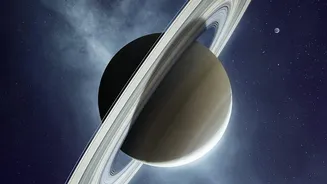
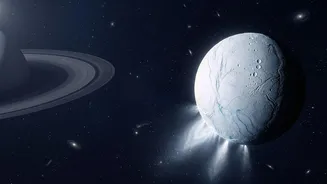
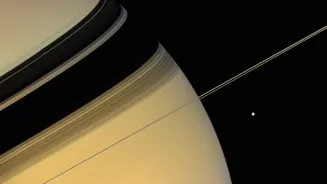
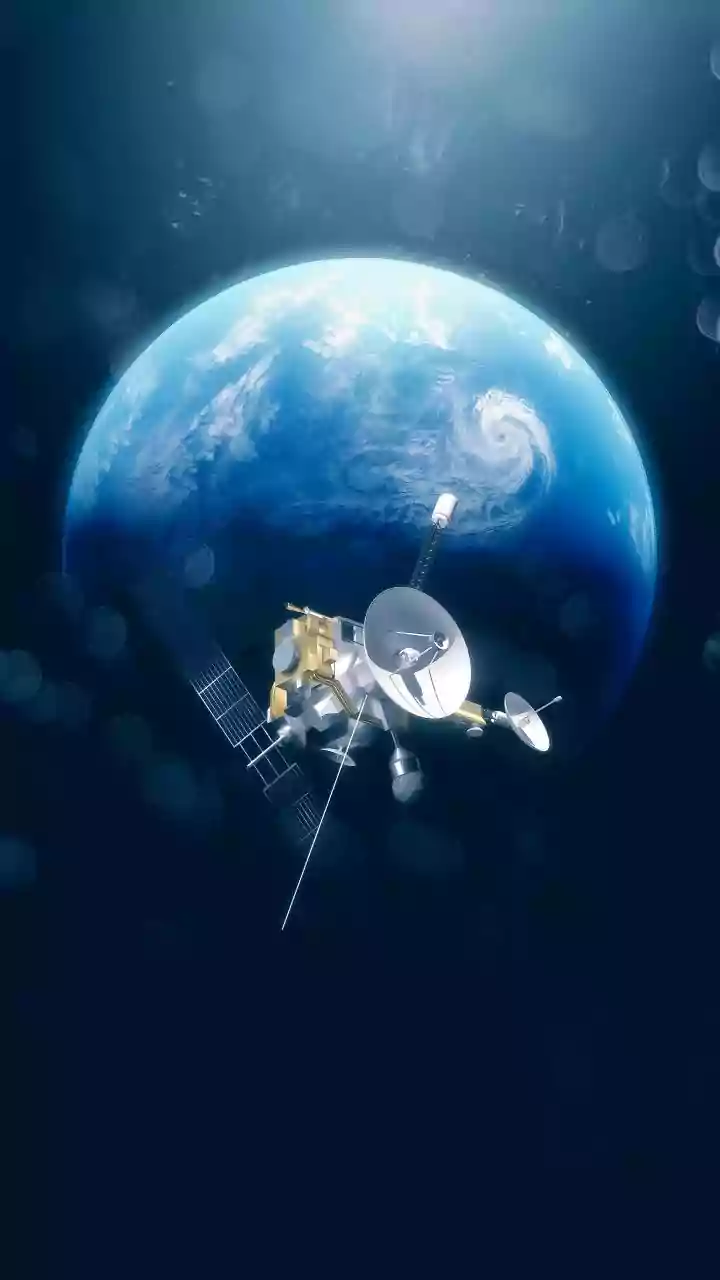
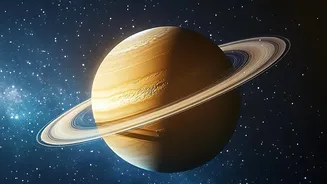
At first glance, Enceladus seems an unlikely spot for life. It's a small, 500-kilometre-wide ball of ice orbiting Saturn. But thanks to NASA’s Cassini spacecraft, we know it hides a spectacular secret: a global ocean of liquid saltwater beneath its frozen
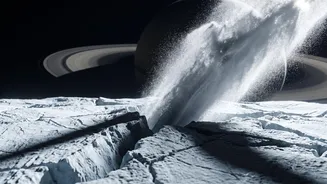
shell. Even more excitingly, this ocean isn't sealed away. Giant plumes of water vapour and ice grains erupt from cracks in the moon's southern pole, spraying material from the ocean hundreds of kilometres into space. Cassini flew through these plumes and tasted them, finding water, salts, and organic molecules—the basic ingredients for life as we know it. It also found evidence of hydrothermal vents on the seafloor, similar to the energy-rich environments where many scientists believe life on Earth first began.
The Hunt for 'Biosignatures'
This brings us to the crucial word in this whole cosmic search: biosignatures. A biosignature is not a living alien you can shake hands with. Instead, think of it as a chemical fingerprint—any substance, molecule, or pattern that provides convincing evidence of past or present life. For a feature to be considered a true biosignature, its formation by non-biological processes must be highly improbable. This could be a complex organic molecule, a specific ratio of isotopes, or certain gases in an atmosphere. Finding organic compounds, as Cassini did, is exciting, but it's not proof of life on its own. The universe is full of non-biological organic chemistry. The real challenge is finding patterns that almost certainly point to a living process.
Why Ice Grains Are Now Key
This is where the latest breakthrough comes in. Recent studies from researchers in Germany have changed our understanding of how those ice plumes work. They found that as droplets of ocean water travel up through the moon's icy cracks, they freeze slowly. This slow freezing process naturally separates and sorts the chemical components of the water. Imagine making a salty slushie; some parts will be icier and some parts will be saltier. A similar thing happens on Enceladus, but with complex organic materials. When the ice finally erupts into space, any potential biosignatures would be highly concentrated within a small fraction of the ice grains. This is fantastic news because it means a future spacecraft wouldn't need to sift through a diluted soup. Instead, it could find a 'pure' sample, making detection far easier than previously thought.
Habitability vs. Proof of Life
It is vital to distinguish between habitability and life. All the evidence from Enceladus points to it being 'habitable'—it has liquid water, an energy source, and the chemical building blocks of life. To underscore this, another recent study successfully grew microbes from Earth's deep-sea vents in lab conditions that mimicked Enceladus's ocean. This demonstrates that similar organisms could survive there. However, this does not mean they do. We have found a promising environment, but we have not found inhabitants. The new research doesn't change this fact, but it gives us a much clearer and more hopeful roadmap for how to find them if they exist.
What Comes Next in the Search?
These findings couldn't come at a better time, as space agencies are already planning our return to Saturn's system. Missions like NASA's proposed Enceladus Orbilander are being designed specifically to investigate the moon's potential for life. This mission concept involves an orbiter that would spend over a year flying through the plumes to collect fresh samples, followed by a lander that would touch down on the surface for two years to analyze the material up close. Similarly, the European Space Agency is developing its own mission, currently slated for the 2040s, to visit Enceladus. The latest research showing that biosignatures may be concentrated and easier to find will directly inform how these missions are designed and what instruments they carry, dramatically increasing their chances of making a historic discovery.