







Where is the Money Going?
This $600 million is not for a single, monolithic project. Instead, NASA is strategically spreading the funds across three key commercial partners to foster a competitive and robust lunar delivery service. The awards, part of the Commercial Lunar Payload
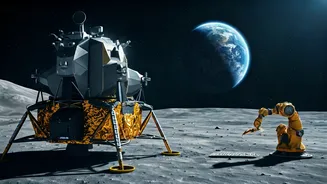
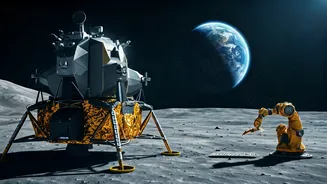
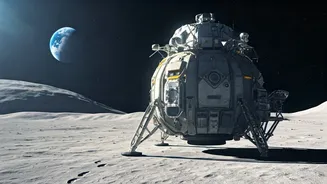
Services (CLPS) initiative, will fund four separate robotic missions to the Moon scheduled for late 2028. The lion's share, about $297.9 million, goes to Pittsburgh's Astrobotic for two landings. Firefly Aerospace of Texas and Intuitive Machines of Houston received approximately $144.2 million and $148.3 million, respectively, for one landing each. This approach continues NASA's strategy of using private companies to transport scientific instruments and technology, helping to build a new lunar economy while reducing costs and accelerating timelines.
The Scientific Toolkit for a Moon Base
These missions are not just about getting to the Moon; they are about learning how to live and work there. Each of the four landers will carry an identical set of three NASA instruments, creating a network of scientific outposts. One instrument, a stereo camera array, will create 3D maps of how a lander's engine exhaust kicks up lunar dust—a critical detail for planning safe landings of larger, crewed vehicles. Another, a small laser retroreflector, will act as a permanent location marker on the surface, allowing future missions to navigate with greater precision. The third is a spectrometer that will measure the lunar radiation environment, providing crucial data needed to design safe habitats and spacesuits for future astronauts.
The Bigger Picture: Artemis Base Camp
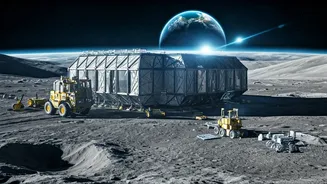
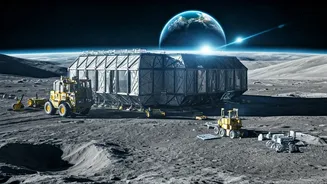
This latest funding is a critical building block for NASA's much larger ambition: the Artemis program. The ultimate goal is to establish a permanent human presence on the Moon, known as the Artemis Base Camp, likely near the resource-rich South Pole. This outpost won't appear overnight but will be built in phases, beginning with robotic missions like these to test technologies and survey the terrain. The plan includes habitats, rovers for mobility, power generation systems, and eventually, the ability for astronauts to stay for long durations. These early CLPS missions are laying the essential groundwork, paving the way for larger infrastructure and, eventually, the return of human crews to the lunar surface.
Partnerships and Future Technologies
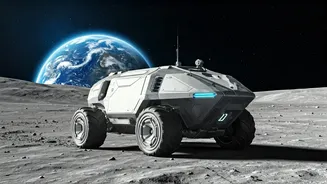
NASA is not going it alone. The agency's entire lunar architecture relies on a network of commercial and international partners. The companies receiving these contracts—Astrobotic, Firefly, and Intuitive Machines—will use updated versions of lander designs that have already been flown or tested, which should increase reliability and mission frequency. Looking ahead, NASA is also exploring even more advanced technologies. There are early plans for a nuclear-powered rover called PROMISE (Polar Rover for Observation, Mapping, and In-Situ Exploration), which could survive the frigid lunar night and search for water ice in permanently shadowed craters. The agency is also soliciting ideas from industry on everything from vertical solar arrays and oxygen production to in-space manufacturing, all essential pieces for a self-sustaining lunar settlement.
What Happens Next?
While these newly announced missions are set for late 2028, the lunar launch cadence is picking up now. Several CLPS missions are slated to launch before then, including some as early as late 2026, though schedules in the space industry are often fluid. For example, Astrobotic is applying lessons learned from a previous unsuccessful mission to an updated lander expected to fly in 2026 or 2027. These robotic flights serve as crucial pathfinders, de-risking the technology and operations needed for the Artemis III mission, which aims to land astronauts on the Moon for the first time since the Apollo era. This steady stream of robotic missions is designed to ensure that when humans return, they are arriving at a place that is better understood and better prepared for long-term settlement.