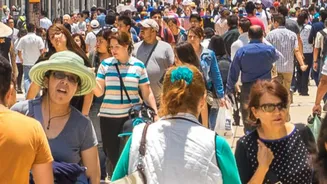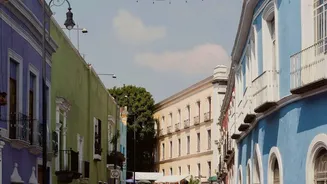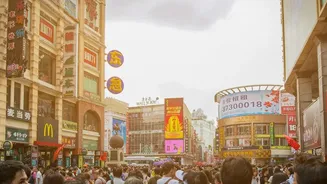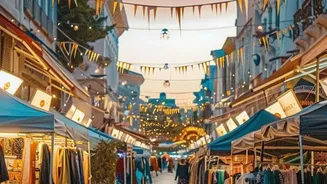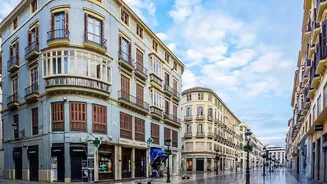


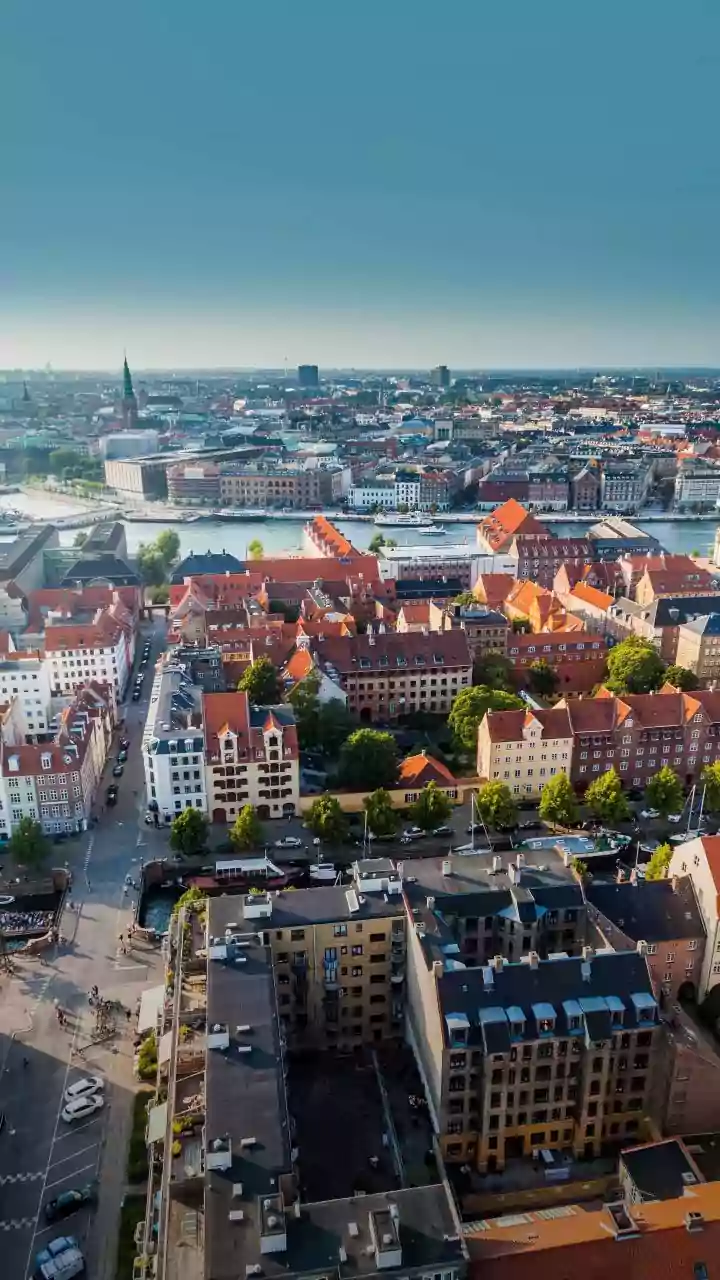

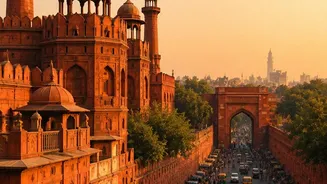
There’s a unique magic to exploring a city on foot, where the rhythm of your steps replaces the roar of traffic. Car-free streets transform urban spaces into open-air lounges, markets, and galleries, inviting you to slow down and truly connect.
La Rambla, Barcelona: The City’s Social Artery
Stretching
for 1.2 kilometres from Plaça de Catalunya to the Columbus Monument at the port, La Rambla is less a street and more Barcelona’s bustling, tree-lined stage. It’s technically a series of shorter streets, placing pedestrians on a wide central promenade while cars are relegated to the sides. This design creates a constant flow of human activity, from the flower stalls and living statues to the crowds spilling out from the famous La Boqueria market. The experience changes from morning to night; a calm morning stroll transforms into a lively, crowded spectacle by the evening. Along the way, you can spot architectural gems, including a pavement mosaic by Joan Miró, and feel the pulse of the city where the Gothic Quarter and El Raval districts meet. Though a major tourist hub, its energy is undeniable, offering a quintessential Barcelona experience.
The Shambles, York: A Walk Through Medieval England
Arguably the best-preserved medieval street in the world, the Shambles in York transports you back to the 14th century. This narrow, cobbled lane is famous for its overhanging timber-framed buildings, which are so close in some parts you can nearly touch both sides at once. This quaint architecture had a practical purpose: the jettied upper floors were designed to shelter the meat displayed on the butcher's shelves below from direct sunlight. The street’s name itself comes from 'fleshammels', an Anglo-Saxon term for the flesh-shelves used by butchers. While only one butcher shop remains today, the original meat hooks can still be seen on some storefronts, which now house quirky independent shops, including several inspired by the street's resemblance to the fictional Diagon Alley.
Strøget, Copenhagen: A Pioneer in Pedestrian Living
One of Europe’s longest pedestrian shopping areas, Strøget became a car-free zone in 1962, a controversial move at the time that proved to be a massive success. It’s not one single street but a collection of them, running 1.1 km through the heart of Copenhagen’s old city, from City Hall Square to Kongens Nytorv. The street functions as a gradient, with budget-friendly high-street brands like H&M and Zara at one end, and high-end luxury stores like Prada and Hermès at the other. It’s also home to Danish design flagships like Royal Copenhagen and Illums Bolighus. Beyond the shopping, Strøget is a social hub filled with street performers, cafes, and historic squares, embodying the Danish concept of 'hygge' and vibrant public life.
Hosier Lane, Melbourne: An Everly Changing Art Gallery
Melbourne’s most iconic cobbled laneway is a worldndominated destination for street art. Located in the central business district, Hosier Lane is a dynamic and constantly evolving canvas where graffiti, murals, and stencils cover every available surface, from the walls to the dumpsters. This isn't a curated gallery; artwork appears and disappears overnight, creating a raw, energetic dialogue between artists. A walk down the lane is a full sensory experience, buzzing with the energy of artists at work and visitors capturing the vibrant backdrops. It's an icon of Melbourne's creative soul, offering a unique urban art experience that is always free and everly changing.
Rue Mouffetard, Paris : A Market Street with Roman Roots
For an authentic taste of Parisian life, head to Rue Mouffetard in the Latin Quarter. This narrow, sloping street, one of the oldest in Paris, follows the path of an ancient Roman road. It's a 'wonderful,
narrow crowded market street', as Ernest Hemingway described it in 'A Movable Feast'. Every morning (except Mondays), the lower end of the street transforms into a bustling open air market. Locals come here for their daily shopping,
browsing stalls piled high with seasonal fruits,
vegetables,
cheeses,
and fresh bread from the surrounding fromageries and boulangeries.
The atmosphere is lively and traditional,
offering a glimpse into the daily rhythms that have defined this neighbourhood for centuries.
De Negen Straatjes , Amsterdam : A Shopper’s Paradise
Known as 'The Nine Streets', this charming district in Amsterdam’s historic canal ring is a haven for shoppers seeking something beyond the big brands. The area consists of nine short,
picturesque streets that crisscross the city's main canals,
connecting the Prinsengracht to the Singel.
These streets are packed with independent boutiques,
vintage clothing stores,
specialty food shops,
and unique designer galleries.
Originally the heart of Amsterdam's fur trade in|the|17th century,
the area now offers|a|delightful|and|easily walkable experience.
It’s|the|perfect place|to wander without|a plan,
discovering hidden gems|and enjoying|the quintessential Amsterdam architecture along|the canals.