







Key Dates and Ritual Timings
Chhath Puja is a four-day festival dedicated to the Sun God, Surya, and Chhathi Maiya. The 2026 celebrations begin on Friday, November 13, and conclude on Monday, November 16. The most significant rituals for ghat visitors are the evening and morning
'Arghya' (offerings). The first day, 'Nahay Khay' (Nov 13), involves a holy bath and the preparation of a traditional meal. The second day, 'Kharna' (Nov 14), includes a day-long fast broken in the evening. The main events at the ghats are the 'Sandhya Arghya' (evening offering) to the setting sun on Sunday, November 15, and the 'Usha Arghya' (morning offering) to the rising sun on Monday, November 16. In Delhi, sunset on November 15 is expected around 5:28 PM, with sunrise on November 16 around 6:44 AM. In Patna, these timings are approximately 5:01 PM and 6:07 AM, respectively. Devotees are advised to check local timings as they vary by city.
Spotlight on Delhi Ghats
In Delhi, home to a large population from Bihar and Eastern UP, the festival is celebrated with great fervour. The city government has been preparing over 1,400 ghats, both permanent and temporary, for the festivities. Popular locations include the ghats at ITO, Vasudev Ghat near Kashmere Gate, Kalindi Kunj, and Geeta Colony. A major new addition this year is an 11-kilometre-long ghat along the Munak Canal, expected to be Delhi's longest. Authorities are focused on cleanliness, lighting, and safety barricades. Given the massive crowds, using public transport like the metro is highly recommended, as roads near major ghats often face traffic restrictions and parking is limited. The Delhi Traffic Police has issued advisories for November 15 and 16, especially for East and Northeast Delhi. More than 5,000 police personnel are expected to be deployed for security and crowd management.
Patna's Riverside Spectacle
Patna, the heartland of Chhath celebrations, transforms its entire Ganga riverfront into a sprawling ritual site. The Patna Municipal Corporation is preparing over 100 ghats and ponds to decentralise crowds and provide convenience. Famous and often crowded ghats include Collectorate Ghat, Mahendru Ghat, the Digha ghats, and Gandhi Ghat. Authorities conduct safety checks, and some ghats may be declared unsafe and closed based on water levels, so it's crucial to follow official announcements. To manage congestion, vehicle movement near the ghats is heavily restricted on Arghya days, with roads like JP Ganga Path (Marine Drive) and Ashok Rajpath closed to traffic. The administration also focuses on providing clean water, with a special initiative to distribute Ganga water via tankers.
The Cultural Scene and Atmosphere
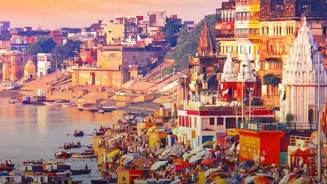
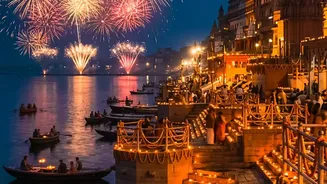
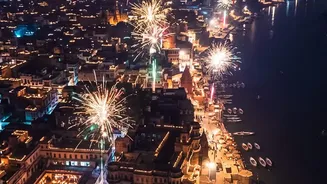
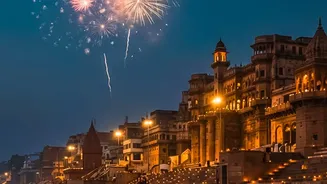
The ghats during Chhath are not just for rituals; they are a vibrant cultural canvas. The air fills with the sound of traditional Chhath songs like 'Kanch hi baans ke bahangiya' played from homes and on the riverbanks. Families arrive together, with men often carrying the 'daura'—bamboo baskets filled with offerings like thekua, fruits, and sugarcane—on their heads. As dusk falls on Sandhya Arghya, thousands of diyas (earthen lamps) are lit and set afloat on the water, creating a breathtaking visual spectacle. It's a deeply communal experience, where families share prasad with friends and neighbours. The atmosphere is one of serene devotion, a stark contrast to the usual city bustle, as devotees stand waist-deep in the water in quiet prayer.
Navigating Crowds and Safety
Safety and planning are paramount for a positive experience. Authorities in cities like Delhi, Noida, and across UP have issued detailed safety advisories. Key recommendations include using only designated ghats, avoiding deep water, and staying within barricaded areas. The steps leading to the water can be wet and slippery, so wearing footwear with a good grip is advisable. For families, it is crucial to keep children and elderly members close, as ghats can become extremely crowded. Officials urge the public not to believe or spread rumours and to follow instructions from police and volunteers. Carry essentials like a water bottle and a charged phone, and wear warm clothing for the chilly pre-dawn Usha Arghya. Above all, patience and respect for the devotees are key to appreciating the sanctity of the occasion.