







The Myth of the Demon and the Nectar
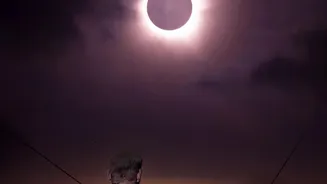
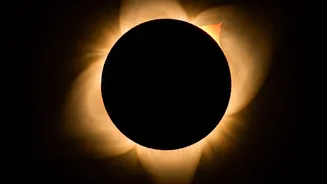
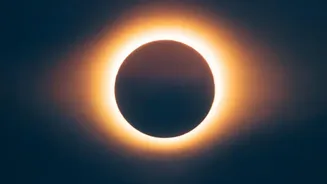
The primary reason many Hindu traditions advise against watching an eclipse, or ‘Grahan’, stems from mythology. The most famous story is that of the 'Samudra Manthan', or the churning of the ocean, found in texts like the Bhagavata Purana. During this
epic event, the devas (gods) and asuras (demons) worked together to produce the nectar of immortality (amrit). When it emerged, Lord Vishnu took the form of a beautiful woman, Mohini, to trick the asuras and distribute the nectar only among the gods. However, one asura named Svarbhanu disguised himself as a god and sat between the Sun (Surya) and the Moon (Chandra) to receive a drink. They spotted the imposter and alerted Vishnu, who swiftly decapitated Svarbhanu with his Sudarshana Chakra. But since the demon had already tasted the nectar, his head and body became immortal. The head was named Rahu and the headless body Ketu. In an act of eternal vengeance against the Sun and Moon for exposing him, Rahu is believed to periodically swallow the Sun, causing a solar eclipse.
An Omen of Impurity
Because of this cosmic struggle, a solar eclipse is seen as an inauspicious event. The Sun, considered a divine source of life and energy ('Prana'), is temporarily overwhelmed by the malefic Rahu. This is believed to disturb the natural order and charge the atmosphere with negative or impure energies. During this period, the forces of darkness are thought to have a temporary victory over light. This belief in a polluted environment is the foundation for many of the precautions taken during the eclipse. Any food cooked or water stored during this time is believed to become contaminated. To counteract this, many people place Tulsi (holy basil) leaves in cooked food and water containers, as Tulsi is believed to have purifying properties.
A Time for Caution and Ritual
To protect oneself from these negative influences, traditions prescribe a set of rules. The most common is to stay indoors and avoid looking at the eclipse. Activities like eating, drinking, cooking, and sleeping are often forbidden. Using sharp objects like knives or needles is also discouraged. Pregnant women are especially advised to take precautions, staying indoors to protect the foetus from the supposedly harmful rays. Instead of carrying on with daily life, the eclipse period is designated for spiritual practices. Many people spend the time fasting, meditating, chanting mantras like the Gayatri Mantra, or reading religious texts. These activities are believed to enhance positive energy and ward off the negative effects of the Grahan. After the eclipse concludes, a cleansing ritual is common, which involves taking a bath and changing into fresh clothes. Many also sprinkle Gangajal (holy water from the Ganges) to purify their homes.
The Scientific Overlap
Interestingly, the traditional advice to not look at the sun finds a strong echo in modern science, albeit for different reasons. Science warns us never to look directly at the sun, eclipse or not, without proper protection. The sun's intense ultraviolet (UV) and infrared radiation can cause severe and permanent damage to the retina, a condition known as solar retinopathy. Since the retina has no pain receptors, you won't feel the damage as it happens. During a partial eclipse, the sun's brightness is reduced, making it deceptively easier to stare at, but the harmful rays are still present and can burn the back of your eye. Therefore, both tradition and science agree on the core instruction—avert your eyes—though their explanations differ, one focusing on spiritual impurity and the other on physical safety.
Tradition in Modern India
In contemporary India, the approach to a solar eclipse is often a blend of the old and the new. While many families continue to observe the traditional rituals with diligence, others take a more relaxed view. Schools and science centres often organize safe viewing sessions using certified eclipse glasses or pinhole projectors, drawing large crowds. For many Indians, there isn't a conflict between faith and science. They may understand the astronomical cause of the eclipse while still choosing to respect the customs passed down through generations. It becomes a personal choice, a way of honouring cultural heritage while embracing scientific knowledge. This duality reflects a broader trend in modern India, where ancient traditions and contemporary life often coexist in a unique and dynamic harmony.