

The title ‘America’s Nostradamus’ evokes images of a modern-day oracle, foreseeing our future. But are these chilling predictions the result of supernatural insight, or do they rely on the ancient, and often vague, art of astrology?
The Rise of a Modern Prophet
In times of uncertainty,
society often looks for figures who claim to have answers. The label 'America's Nostradamus' has been applied to several individuals over the years, most recently to author and prophecy interpreter John Hogue. Hogue has spent decades studying the 16th-century writings of French astrologer Michel de Nostredame (Nostradamus) and claims to interpret them for our modern era. His predictions are often dramatic, forecasting global conflicts, economic collapse, and political upheaval, often tied to specific dates. For instance, recent claims include a 27-year global war and the collapse of American economic power by 2028. These proclamations garner significant media attention, tapping into a deep-seated public fascination with the future and a desire for control in a chaotic world.
Astrology as the Blueprint
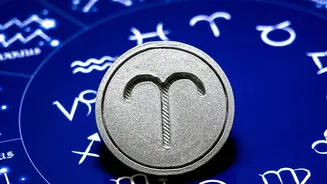
While presented as prophecy, the methodology behind these claims is openly rooted in astrological interpretation. Hogue's forecasts are reportedly based on his analysis of Nostradamus's famously cryptic quatrains, combined with his own understanding of astrological cycles. For example, he has cited a 24-month astrological cycle he calls the 'Shofar Silence,' from September 2026 to September 2028, as a period of impending economic crisis. This differs fundamentally from evidence-based forecasting, which relies on measurable data, statistical models, and verifiable trends. Astrology, in contrast, uses symbolic language and the perceived alignment of celestial bodies to make predictions. This system is inherently interpretive and flexible, allowing for a wide range of potential meanings.
The Power of Vague Language
The success of such prophecies often lies not in their accuracy, but in their ambiguity. This is a psychological phenomenon known as the Barnum Effect, where people tend to accept vague and general statements as highly specific, personal insights. The original quatrains of Nostradamus are a masterclass in this, filled with symbolic language and non-specific references that can be retrofitted to almost any major historical event. Modern interpreters continue this tradition. A prediction of 'global conflict' or 'economic instability' is almost certain to be proven 'true' in some form over any given period. This vagueness leaves ample room for confirmation bias, where believers latch onto details that seem to fit while ignoring the vast number of inaccuracies.
Why We Are Drawn to Prophecy
The appeal of figures like 'America's Nostradamus' is less about the evidence and more about human psychology. Our brains are wired to seek patterns and create a sense of control over the unknown. In periods of social, political, or economic anxiety, the desire for certainty skyrockets. A prophet, even one with a dubious track record, offers a narrative—a sense of order in the chaos. Believing in a prediction, even a negative one, can feel more comforting than facing complete uncertainty. Furthermore, the Pollyanna Principle, or positivity bias, suggests we are more likely to accept and remember positive statements, but even dire warnings can offer a sense of preparedness. Hogue himself has stated he hopes his work serves as a warning to encourage humanity toward better choices, framing his predictions not as inevitable fate but as avoidable outcomes.
Evidence-Based Reality Check
When subjected to scientific scrutiny, astrology and prophecy have consistently failed to demonstrate any predictive power beyond what can be attributed to chance and psychology. Self-proclaimed prophets often have a history of failed predictions that are quickly forgotten in the excitement over a new claim. The core issue is a lack of falsifiable claims. A truly scientific prediction is specific enough that it can be proven wrong. Astrological prophecies, however, are often so open-ended that they can be reinterpreted after the fact to fit whatever happens. While the study of history and economics can offer genuine insight into future possibilities, these fields rely on transparent data and methodology, a stark contrast to the mystical interpretations and ancient texts that form the basis of modern prophecy.