




The Mountain’s Melting Glue
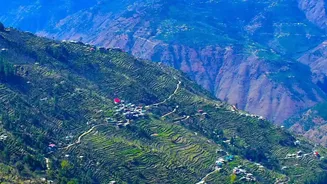
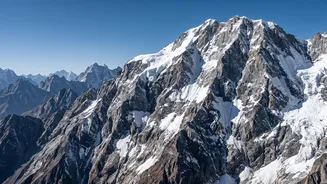
Deep within the high-altitude rock and soil of the Himalayas lies a hidden binding agent: permafrost. This is ground that has remained frozen for at least two consecutive years, acting like a natural cement that holds steep slopes together. However, as the region
warms at a rate faster than the global average, this crucial glue is beginning to thaw. When permafrost degrades, the ice within it melts, weakening the bonds that hold rock and soil in place. This process turns previously stable mountain faces into hazardous zones, primed for collapse. Scientists have noted that this loss of frozen ground makes slopes far less stable, significantly increasing the likelihood of rockfalls and landslides.
From Glaciers to Catastrophic Floods
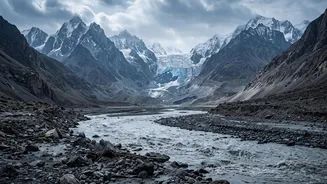
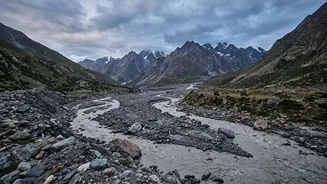
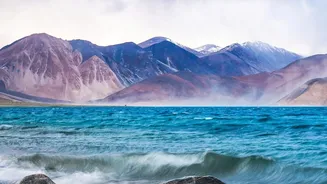
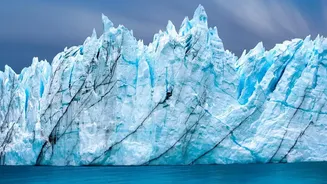
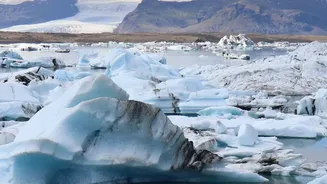
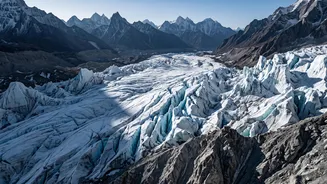
The dramatic retreat of Himalayan glaciers is one of the most visible signs of a warming climate. But the danger isn't just in the loss of ice; it's in what the melting leaves behind. As glaciers shrink, they often leave behind vast lakes dammed by unstable walls of rock and debris called moraines. These glacial lakes are growing in both number and size across the Himalayas. The risk comes when these natural dams fail, triggering a Glacial Lake Outburst Flood (GLOF). A GLOF is a sudden and violent release of massive volumes of water that can surge downstream, carrying boulders and debris at immense speed. Such events can be triggered by a number of factors, including a rock or ice avalanche plunging into the lake. The destructive power of these floods threatens entire communities, roads, and critical infrastructure like hydropower plants located in river valleys downstream.
The Rock-and-Ice Avalanche Effect
Another alarming phenomenon is the increase in combined ice-and-rock avalanches. As warming reduces the ice that supports steep rock faces, it makes catastrophic collapses more frequent. When a massive chunk of a glacier breaks off, it often brings down the weakened rock beneath or around it. This mixture transforms into an extraordinarily large and mobile debris flow, as seen in the tragic 2021 Chamoli disaster in Uttarakhand. The initial collapse can feel like an explosion, and the resulting flow of mud, water, and rock can travel for many kilometres, overwhelming anything in its path. Experts warn that climate change is creating the exact conditions that destabilise high-mountain environments, leading to these cascading hazards.
A Cascade of Consequences for India
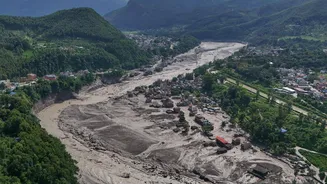
For the millions of people living in the Indian Himalayan states like Uttarakhand, Himachal Pradesh, and Sikkim, these geological changes are not abstract threats. The increased frequency of landslides, GLOFs, and debris flows poses a direct and growing risk to lives, livelihoods, and infrastructure. Events in recent years, such as the 2023 GLOF in Sikkim, serve as stark reminders of this vulnerability. Roads that are lifelines for mountain communities are being washed away, and vital hydropower projects face destruction. Scientists have pointed to a clear trend: floods, landslides, and avalanches are increasing in both frequency and ferocity across the Hindu Kush Himalayan range, a region warming significantly faster than many other parts of the world.