






A Sudden Shift at the Top
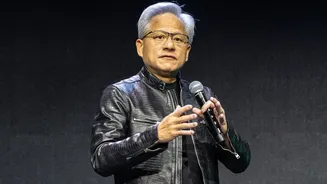
On November 12, 2026, Nvidia announced that its co-founder and CEO of 33 years, Jensen Huang, had resigned with immediate effect. The board appointed Chief Financial Officer Colette Kress as interim CEO, tasking her with navigating the company through
this critical transition while it searches for a permanent successor. The departure of Huang, a leader intrinsically linked to Nvidia's identity and its rise to the center of the AI universe, created immediate uncertainty. His leadership was pivotal in shaping not just the company's product roadmap, but its entire ecosystem strategy, making his exit a significant moment for the entire tech industry.
The Strategy Under a Microscope
Under Huang, Nvidia became more than just a chip supplier; it evolved into the financial backbone of the AI revolution. The company engaged in massive financial arrangements, including investments, vendor financing, and guarantees to help customers and 'neocloud' providers afford the costly infrastructure needed to run advanced AI. These commitments have ballooned, with supply agreements reaching $390 billion and financial guarantees for AI infrastructure projects hitting $118 billion. While this strategy successfully fueled demand for Nvidia's hardware, it also created a complex web of financial interdependencies that is now facing intense scrutiny. Analysts question whether this level of financial exposure is sustainable without Huang's singular vision and risk tolerance to steer it.
A New Tone on Capital Discipline
The market is looking for any change in direction from the new leadership. In her first earnings call as interim CEO, Colette Kress struck a tone of continuity and stability, stating it was 'business as usual'. However, she also stressed that the company would be 'disciplined in how we commit capital' and 'rigorously evaluating future investments, commitments, and guarantees'. This pivot in language, however subtle, was noted by investors who are increasingly concerned about the returns on these massive AI infrastructure buildouts. The central question is whether customer spending is driven by genuine operating cash flow or by external financing, some of which is facilitated by Nvidia itself.
Investor and Market Reaction
Despite posting record-breaking quarterly revenue of $115.8 billion, Nvidia's stock has been volatile. The shares initially fell on the news of Huang's departure, highlighting the market's anxiety about a 'key man risk'—the dependence on a single founder for vision and execution. While the strong earnings report provided some reassurance, the focus has shifted from past performance to future strategy. Investors are now weighing the company's undeniable technological dominance against the risks of a leadership transition and the opaque nature of its vast financial commitments. The performance of bonds from AI infrastructure companies like CoreWeave, which have seen yields spike, reflects growing anxiety about what happens if Nvidia curtails its role as the industry's financier.
What's Next for the AI Ecosystem
Nvidia's next steps will have ripple effects across the global technology landscape, including India's rapidly expanding AI sector. The company's board has made it clear that it will not reinstate Huang and is conducting a thorough search for a new, permanent CEO. The new leader will inherit a company with a dominant market position but will also need to address the pressing questions about its financial strategy. For the broader industry, a more disciplined Nvidia could mean tighter financing conditions for smaller AI players, potentially slowing the pace of infrastructure growth. The industry will be watching closely to see if Nvidia, under new leadership, can maintain its incredible momentum while navigating the complexities of the ecosystem it helped create.