




What is Vehicle-to-Vehicle (V2V) Communication?
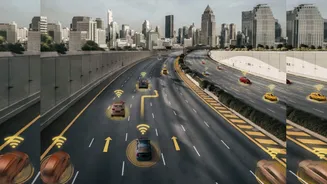
At its core, V2V technology allows vehicles to 'talk' to each other by wirelessly exchanging real-time data. This isn't about streaming music or making calls; it's a high-speed, direct conversation between cars, two-wheelers, and trucks. They continuously
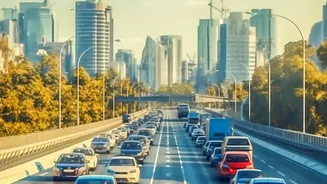
broadcast information like their speed, location, direction, and whether they are braking or accelerating. Unlike cameras or radar, which are limited by line of sight, V2V can detect a hazard around a blind curve or in heavy traffic. This forms the foundation of a broader ecosystem called Vehicle-to-Everything (V2X), where vehicles also communicate with infrastructure like traffic lights (V2I), pedestrians' smart devices (V2P), and the wider network (V2N). The goal is to create a cooperative network that makes driving safer and more efficient for everyone.
India's Decisive Push for Connected Cars
The Ministry of Road Transport and Highways (MoRTH) has unveiled a significant plan to integrate this technology into Indian vehicles. Through a draft notification issued on August 3, 2026, the government has proposed a phased mandate for V2V communication systems. The plan has two key dates: starting October 1, 2027, any new vehicle fitted with a V2V system must comply with a new standard called AIS-230. Then, from October 1, 2028, it will become mandatory for all newly manufactured two-wheelers, passenger cars, and commercial vehicles to come equipped with these systems. This move signals a clear intent to move beyond optional safety features and lay the groundwork for a nationwide intelligent transport system.
The Standard at the Centre: AIS-230
The new regulation is built around Automotive Industry Standard (AIS) 230. This standard sets the technical, performance, and cybersecurity requirements for V2V systems in India. Crucially, it specifies the use of Cellular Vehicle-to-Everything (C-V2X) technology. This is a major decision in the global 'standards war' between two main technologies: DSRC (based on Wi-Fi) and C-V2X (based on cellular technology). While both aim for the same safety outcomes, they are not interoperable. By choosing C-V2X, India is aligning with a more modern technology that has a clearer path to 5G integration and is being heavily adopted in major markets like China and the US. The standard also details which safety applications must be supported, including emergency brake alerts, forward collision warnings, and wrong-way driving alerts.
How This Will Change Driving in India
The primary benefit is a dramatic improvement in road safety. With one of the highest rates of road fatalities in the world, India can leverage V2X to provide proactive warnings and prevent accidents before they happen. For drivers, this means getting alerts about a motorcycle in a blind spot or a pedestrian crossing in an unlit area. It complements existing Advanced Driver Assistance Systems (ADAS) by adding a layer of awareness that sensors alone cannot provide. Beyond safety, the technology promises to improve traffic flow by enabling communication with smart traffic signals, reducing congestion, saving fuel, and paving the way for more advanced autonomous driving features in the future.
The Roadblocks Ahead
While the vision is compelling, the path to full-scale deployment has challenges. One major hurdle is infrastructure. For the system to be effective, it requires widespread adoption—a safety alert is useless if only a few vehicles can receive it. This includes building out a network of Roadside Units (RSUs) and ensuring robust, low-latency 5G coverage, especially outside major cities. Cost is another factor, both for manufacturers to integrate the hardware and potentially for consumers. Finally, cybersecurity is a critical concern. Ensuring that this vast network of communicating vehicles is secure from hacking and that user data remains private is a massive undertaking that will require stringent oversight and a robust 'trust infrastructure'.