

The Breaking Point
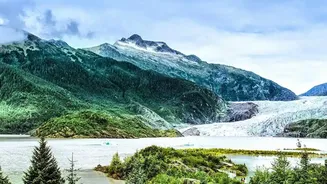
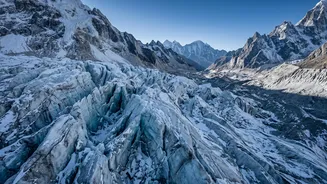
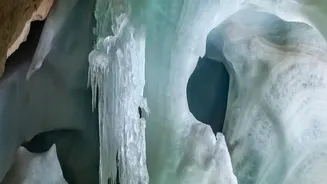
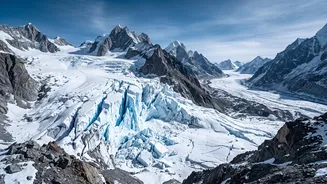
A glacial detachment is when a large portion of a glacier's tongue breaks away from the main ice body. This isn't a gentle melting process; it's a catastrophic failure. Several factors can lead to this point. Rising temperatures accelerate melting, which
lubricates the base of the glacier, reducing friction and stability. This meltwater can also fill crevasses, creating pressure that wedges the ice apart. In other cases, an unstable landform, like a loose pile of rock and debris called a moraine, can fail. A large rock avalanche, heavy snowfall, or even an earthquake can be the final trigger, causing a sudden, violent release. What follows is not just a flood of water, but a terrifying cascade of materials.
A Devastating Downstream Cocktail
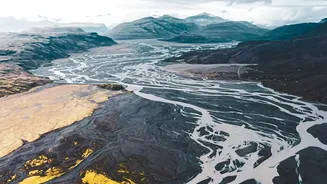
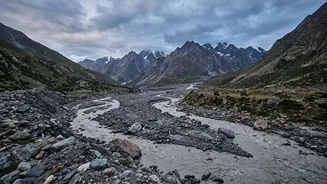
When a detachment occurs, it doesn't just release water. It creates a powerful, fast-moving slurry of ice, rock, and mud. This event is often known as a Glacial Lake Outburst Flood, or GLOF. These floods are among the most powerful in nature. The initial burst of water can be immensely destructive on its own, but the real danger comes from what it picks up along the way. The torrent erodes riverbeds and valley walls, incorporating massive volumes of sediment and rock into the flow. This transforms the flood into a debris flow, a dense, concrete-like mixture that can travel for over 100 kilometers, destroying everything in its path, including homes, bridges, and hydroelectric infrastructure. The force can be many times greater than a normal flood, carrying boulders and uprooting entire forests.
The Himalayan Connection
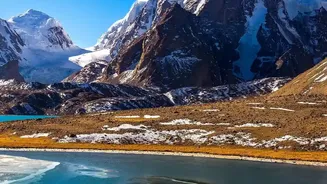
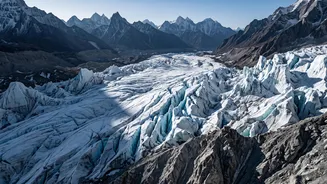
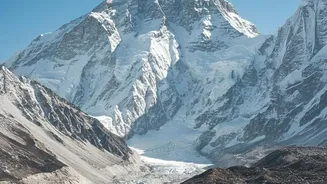
For India and the wider Hindu Kush Himalaya region, this is not a distant, abstract threat. The Himalayas are home to thousands of glaciers and a growing number of glacial lakes. As the region warms, these lakes are expanding in both number and size, many held back by unstable moraine dams. This has dramatically increased the risk of GLOFs. Communities throughout the mountain ranges live under this growing threat, where a hazard originating high in the remote peaks can become a life-altering disaster for villages far downstream. These events pose a serious risk to lives, livelihoods, and critical infrastructure that is vital to the region's economy and development.
A Warming World, A Growing Hazard
The link between climate change and the increasing frequency of these events is clear. Glaciers around the world are retreating at an unprecedented rate due to rising global temperatures. This rapid melt not only contributes to sea-level rise but also directly increases the instability of mountain environments. Warmer air temperatures lead to more meltwater, which destabilises the ice. Thawing permafrost can weaken valley walls, making rockfalls more likely. Studies show that the pace of glacier loss has accelerated dramatically in recent decades, with a significant portion of this loss attributed to human activity. As a result, events that were once considered rare are becoming more common, creating new and unexpected hazards in mountain regions globally.