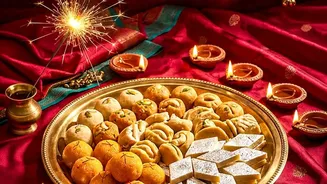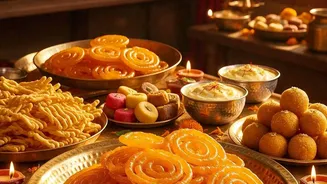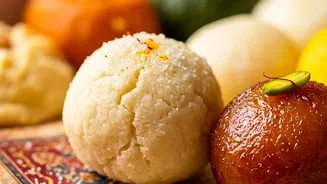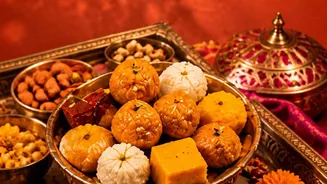




The festival lights have dimmed, but your fridge is still packed with boxes of mithai. Instead of letting these festive treats go to waste, a few simple checks and creative ideas can give them a delicious new life while keeping your family safe.
Your Senses Are the First Defence
Before
you think about creative recipes, the first and most critical step is to check if the mithai is still safe to eat. Your senses are your best guide. Start with a visual inspection. Look for any visible mould, which can appear as green, grey, or black spots. A sticky, slimy, or unusually dry texture is another red flag. Next, trust your nose. Fresh mithai should have a pleasant aroma of its core ingredients, like milk, ghee, or nuts. If you detect any sour, stale, or chemical-like smell, it's best to discard the sweet immediately. Milk-based sweets, such as peda, barfi, and kalakand, are the most perishable and require the closest inspection. A sour smell or taste in these is a definite sign of spoilage.
Understanding Mithai Shelf Life
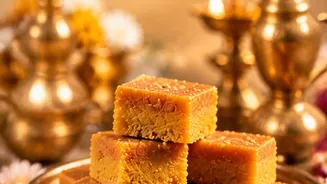
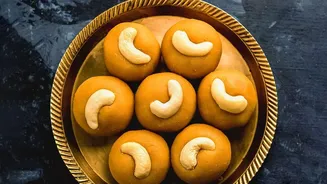
Not all sweets are created equal when it comes to shelf life. The ingredients determine how long they last. Sweets with high moisture and milk content, like kalakand, rasgulla, and sandesh, are the most perishable, often lasting only a day or two even when refrigerated. Khoya-based sweets like pedas and milk barfis can last for about three to four days in the fridge. Drier sweets made from ghee, flour, and nuts have a much longer lifespan. Besan ladoo, kaju katli, and dry fruit barfis can stay fresh for about a week at room temperature if stored correctly, and even longer in the fridge. Always remember the two-hour rule: any perishable sweet left at room temperature for more than two hours should be discarded to be safe.
Smart Storage for Lasting Freshness
Proper storage is key to extending the life of your leftover mithai. The most important rule is to use airtight containers to protect sweets from air and moisture, which accelerate spoilage and cause dry sweets to lose their texture. It's also crucial to store different types of sweets separately. Keeping moist, milk-based sweets with dry, nut-based ones can cause the dry sweets to become soggy and transfer flavours. Milk-based and syrupy sweets like gulab jamun should always be refrigerated. For drier sweets like ladoos and barfis, a cool, dark cupboard is often sufficient, though refrigeration can extend their life further. If you refrigerate them, let the container come to room temperature for about 20 minutes before opening to prevent condensation from making the sweets sticky.
Creative Twists: Mithai Reimagined
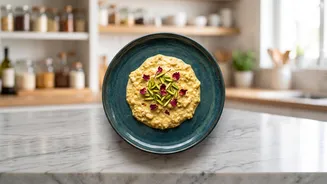
Once you've confirmed your mithai is fresh, it's time for the fun part. Leftover sweets can be the base for stunning new desserts. Crumble any kind of barfi—pista, coconut, or besan—and press it into a jar or tart tin to form a flavourful crust for a no-bake cheesecake. Simply top it with a mixture of hung curd or cream cheese sweetened with a little honey and chill. Motichoor ladoos can be transformed into elegant parfaits by layering the crumbled ladoo with chilled rabri or thick yogurt, topped with nuts and pomegranate seeds for a crunch.
From Leftovers to Bakes and Shakes
The possibilities don't end there. Drier mithai can be wonderfully incorporated into baked goods. Consider crumbling leftover besan barfi into your next batch of brownie batter for a rich, fudgy treat with a desi twist. Kaju katli can be grated and mixed into cookie dough to create nutty, flavourful kaju katli cookies. For a much simpler and quicker option, blend any milk_based barfi or peda with milk and a pinch of cardamom to create a rich and creamy mithai milkshake. Even gulab jamuns can find a new purpose; try chopping them up and folding them into a simple vanilla ice cream base before freezing for a decadent gulab jamun ice cream.