







A Clear Choice With a Deadline
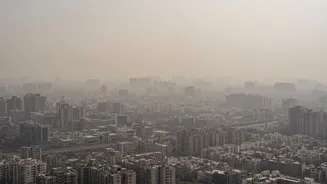
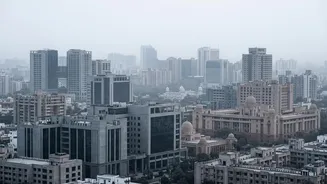
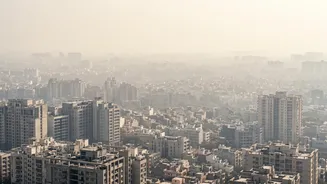
The latest report from the UN Environment Programme (UNEP) and the Climate and Clean Air Coalition (CCAC) presents Delhi with a clear fork in the road. The core new detail is a specific, time-sensitive projection: if India meets its national air quality
standards on schedule from 2026, the city can reduce its cumulative PM2.5 exposure burden by 20% by the year 2040. However, the report, titled ‘Hidden Assets: The Economic and Health Case for Climate and Clean Air Action’, warns what will happen if action is delayed by about eight years, which is the expected global average. In that scenario, the reduction in pollution exposure would be slashed in half, to just 10%. This finding moves the conversation from general warnings to a quantifiable outcome, showing exactly how much is lost with every year of inaction.
The Staggering Economics of Clean Air
Perhaps the most powerful new element the report brings is its framing of clean air as a massive economic opportunity. It argues that for too long, climate action has been seen as a cost. This UN assessment reframes it as an investment with huge returns. Globally, it calculates that for every one dollar invested in measures that simultaneously tackle air pollution and climate change, there is a return of about fifteen dollars in economic benefits. These gains come from reduced healthcare costs, higher labour productivity, and the avoided monetary value of premature deaths and illnesses. Conversely, each year of delay is projected to cost the global economy more than $1.5 trillion in forfeited benefits. For South Asia specifically, the economic burden from air pollution is already equivalent to 10% of the region's GDP.
Identifying the Roadblocks
While the report outlines a clear path forward, it also identifies the primary hurdles. It’s not a lack of technology or solutions, but rather “institutional barriers.” These barriers—which include siloed decision-making between departments, weak enforcement of existing laws, and poor coordination—are the single largest contributor to inaction. Globally, these institutional problems are expected to cause an average delay of around 2.4 years in implementing clean air solutions. This insight helps explain why, despite years of discussion and readily available fixes, progress remains frustratingly slow on the ground. The report suggests that tackling these systemic issues is just as important as deploying new technologies.
A 25-Point Plan for Action
The UN report doesn't just diagnose the problem; it provides a prescription. It identifies 25 feasible and already-existing solutions that can dramatically cut emissions. These aren't futuristic concepts but practical measures. The list includes accelerating the shift to renewable energy, enforcing stricter vehicle emission and efficiency standards, improving industrial process emissions, and, crucially for India, expanding the use of clean cooking and heating solutions to move away from biomass burning. The report highlights India's Pradhan Mantri Ujjwala Yojana (PMUY) program as a positive step in this direction, having expanded LPG access to millions of low-income households.
The Unchanging Human Cost
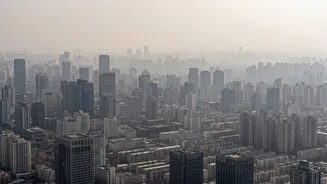
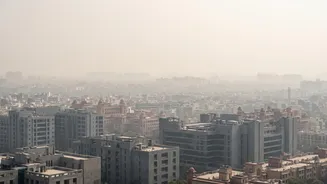
While the economic and policy details are new, the report underscores the devastating human toll that continues to mount. Globally, human-caused outdoor air pollution was linked to an estimated 6.4 million premature deaths in 2025. Beyond fatalities, the toxic air contributes to millions of new cases of childhood asthma, dementia, strokes, and heart disease annually. For Delhi, where PM2.5 levels can be nearly 10 times higher than WHO guidelines, these are not just global statistics but a local health crisis. Studies have long shown that Delhi's residents suffer from higher rates of hypertension, chronic headaches, and eye irritation, with mortality rates climbing in lockstep with pollution levels.