



Instead of Fushimi Inari Shrine, Try Nezu Shrine
The endless tunnel of vermilion torii gates at Kyoto's Fushimi Inari Shrine is world-famous for a reason, but capturing that perfect, person-free photo often requires arriving at dawn. For a similar visual thrill without the overwhelming crowds, head
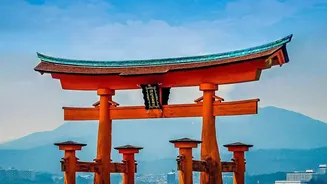
to Nezu Shrine in Tokyo. Nestled in the quiet Bunkyo ward, Nezu Shrine offers its own mesmerizing path of red torii gates winding up a small hill. While not as extensive as Fushimi Inari's, the pathway is dense, beautiful, and provides that sought-after photo opportunity in a much more relaxed atmosphere. Founded over 1,900 years ago, the shrine itself is one of Tokyo's oldest and most beautiful, set within a lush landscape that feels like an escape from the bustling city. It delivers the same spiritual and aesthetic experience, allowing you to appreciate the tradition without the tourist bottleneck.
Instead of Arashiyama Bamboo Grove, Try Adashino Nenbutsu-ji
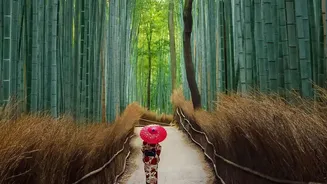
The ethereal experience of walking through Arashiyama's towering bamboo grove is on every Kyoto visitor's list, leading to a near-constant traffic jam of people and selfie sticks. Just a 20-minute walk away lies Adashino Nenbutsu-ji, a temple offering a far more tranquil alternative. This hauntingly beautiful site is known for its 8,000 stone statues representing the souls of the dead, creating a profoundly spiritual atmosphere. At the back of the temple grounds, a short but dense bamboo-lined path curves up a stairway, providing the same feeling of being enveloped by nature. Because it’s smaller and less famous, you can often have the grove almost to yourself, allowing for quiet reflection and unobstructed photos—a true luxury compared to the main Arashiyama path.
Instead of Kinkaku-ji (Golden Pavilion), Try Ginkaku-ji (Silver Pavilion)
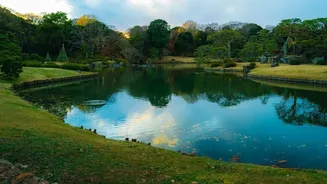
Kinkaku-ji's brilliant, gold-leaf-covered exterior is a dazzling sight, but also one of Kyoto's most congested. For a lesson in Japanese aesthetics with a fraction of the visitors, visit its counterpart, Ginkaku-ji, the Silver Pavilion. Despite its name, the pavilion was never actually covered in silver, and its beauty lies in its understated, rustic simplicity. Ginkaku-ji is a masterclass in wabi-sabi—the art of finding beauty in imperfection and impermanence. The temple grounds feature a meticulously raked sand garden and a lush moss garden that winds up a hill, offering peaceful views over the complex. While Kinkaku-ji is about immediate, vibrant grandeur, Ginkaku-ji offers a quieter, more contemplative experience that reveals its beauty slowly and thoughtfully.
Instead of Dotonbori, Try Shinsekai
Osaka's Dotonbori district is a spectacular assault on the senses with its giant neon signs and endless street food stalls, but it can be overwhelmingly crowded. For a similar vibrant, food-focused energy with a more retro, local feel, head to the Shinsekai district. Meaning "New World," Shinsekai was developed in the early 1900s and now feels like a charming time capsule. Dominated by the Tsutenkaku Tower, its streets are filled with colorful, old-school signs, affordable kushikatsu (deep-fried skewer) restaurants, and lively game arcades. It has the same gritty, fun-loving spirit that defines Osaka's nightlife but feels more authentic and less curated for mass tourism, offering a glimpse into a more nostalgic side of the city.
Instead of Shibuya Crossing, Try the Side Streets of Shinjuku
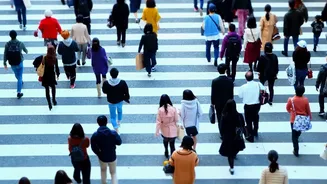
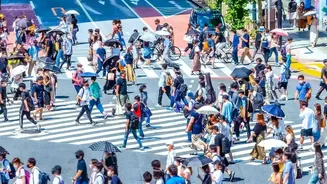
The sheer scale of humanity at Tokyo's Shibuya Crossing is a modern marvel, but once you've seen it, the experience can feel more chaotic than compelling. To immerse yourself in a similarly dense, neon-soaked urban spectacle that feels more like the real Tokyo, explore the streets surrounding Shinjuku Station, the world's busiest transport hub. The area around the south and east exits, in particular, pulses with a constant flow of commuters and shoppers. Here, towering department stores, glowing signs, and endless streams of people create a powerful sense of metropolitan energy. Unlike Shibuya's tourist-focused crossing, this is the everyday heart of the city's hustle. For an even more atmospheric experience, dive into nearby Omoide Yokocho (Memory Lane), a network of narrow alleys filled with tiny, lantern-lit yakitori stalls and bars.