


Recreating a Lunar Deep Freeze
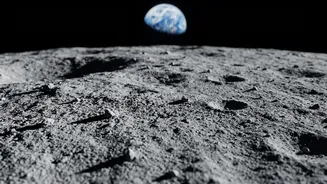
Scientists have long believed the lunar surface to be a sterile environment, where the combination of unfiltered solar radiation, wild temperature swings, and a vacuum would destroy any form of life. A recent NASA-led study, however, challenges this long-held
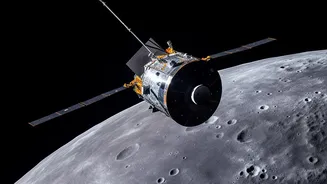
assumption. Researchers created detailed computer simulations based on data from NASA's Lunar Reconnaissance Orbiter, modeling the harsh conditions at the moon’s south pole. They then introduced five types of common microbes into this virtual environment. These weren't exotic extremophiles, but fungi and bacteria often found on human-crewed spacecraft, like Aspergillus, a type of fungus, and Staphylococcus, a common bacterium. The goal was to see if the unique topography of the lunar poles—specifically its deep, permanently shadowed regions (PSRs)—could offer enough protection for these microscopic hitchhikers to survive.
The Extremophiles That Endured
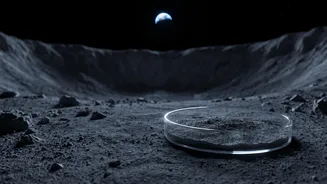
The results were surprising. While the microbes couldn't grow or thrive, the models showed they could survive in a dormant state for a significant period. The key is the shadows. Craters, ridges, and even small bumps on the lunar surface can block the sun's deadly ultraviolet radiation. These permanently shadowed regions are incredibly cold and shielded, providing small but significant pockets of survivability. The fungus Aspergillus proved to be the champion survivor, with its tough cell walls and protective pigments making it exceptionally resilient to radiation. In some simulations, it could persist for up to a week or more. The bacteria tested were less hardy but could still survive in the most protected, deeply shadowed craters. This doesn't mean the moon is teeming with life, but it proves the surface is less hostile than previously assumed.
A New Wrinkle for Artemis
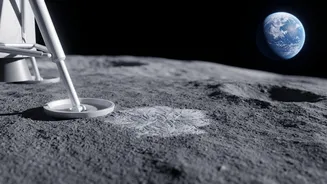
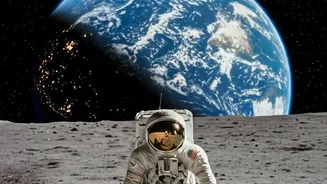
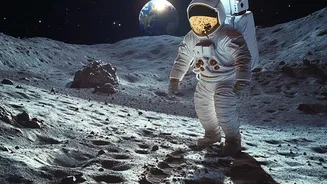
This discovery has profound implications for the future of space exploration, particularly NASA's Artemis program, which aims to establish a long-term human presence at the lunar south pole. This is the exact region where the study found microbes could survive. Humans shed millions of microbes wherever they go, and astronauts are no exception. Every boot print, every tool, and every piece of equipment brought to the moon will carry a biological payload. Previously, mission planners could assume the harsh lunar environment would act as a natural sterilizer. This new research suggests that's not the case. The microbes we bring with us could persist, especially in those scientifically valuable shadowed craters that may hold water ice.
The Challenge of Planetary Protection
The potential for microbial survival creates a major headache for scientists. One of the primary goals of returning to the moon is to study its pristine chemistry, searching for clues about the formation of the solar system and even the origins of life. If we contaminate these sites with our own microbes, it could become incredibly difficult to distinguish between native lunar material and biological hitchhikers from Earth. It complicates the search for everything from ancient organic compounds to water ice. This has led to renewed calls for stricter planetary protection protocols for lunar missions. Currently, rules for missions to the moon are less stringent than for Mars, but these findings suggest that any area targeted for human exploration, especially PSRs, should be treated as a sensitive environment. It’s not about protecting the moon from a microbial invasion, but about protecting the integrity of our own science.