







India is advancing its space ambitions with a Rs 128.11 crore project aimed at creating a sovereign, AI-powered satellite network. This strategic move combines cutting-edge technology with the national goal of self-reliance, or 'Atmanirbhar Bharat'.
What is the AI-ELINT Satellite Project?
India
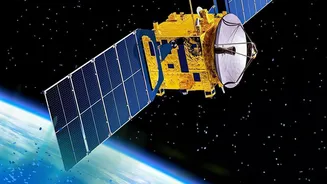
is investing in a significant space technology initiative to develop an indigenous, AI-enabled electronic intelligence satellite constellation. The project, with a total cost of Rs 128.11 crore, involves a crucial partnership between the government and the private sector. The Technology Development Board (TDB), under the Department of Science and Technology, has committed Rs 64.05 crore in funding to Bengaluru-based startup Astrome Technologies to spearhead this initiative. This project focuses on developing a network of microsatellites, each weighing around 50 kilograms, that will operate in Low Earth Orbit. The core mission is to create a sovereign capability in space-based electronic intelligence, a critical asset for national security and strategic autonomy.
The 'AI' Advantage in Space
Unlike traditional imaging satellites that take pictures, this new constellation will specialize in Electronic Intelligence, or ELINT. This means the satellites are designed to 'listen' rather than 'see'. They will detect and analyze a wide range of electronic signals, such as radio and radar emissions from ground stations, ships, and aircraft. This gives them a major advantage over optical satellites, which are often limited by cloud cover or darkness. Artificial Intelligence is the key that unlocks the full potential of this system. AI-powered software on the ground will process the vast amounts of data collected by the satellites, identifying unusual patterns and potential threats far faster than human analysts could. This integration of AI allows for rapid, actionable intelligence.
Fostering a Domestic Space Ecosystem
This project is a clear signal of India's push towards 'Atmanirbhar Bharat' in the high-stakes domain of space technology. By funding a domestic startup like Astrome Technologies, the government is not just acquiring a strategic asset but also nurturing a robust private space ecosystem. The goal is to advance the core technologies from a mid-level Technology Readiness Level (TRL-4) to a fully proven, operational level (TRL-9). The project integrates three critical, indigenously developed components: the ELINT payload on the satellites, inter-satellite communication links that allow the constellation to work as a unified network, and the AI-based ground processing software. This fosters self-reliance and reduces dependence on foreign technology for critical national security infrastructure.
Strategic Importance and Future Outlook
The ability to persistently monitor electronic signals across borders and seas has profound strategic implications for India. This capability enhances national security by providing early warnings and a deeper understanding of regional activities. The system is designed for broad geographical coverage, with observation frequency increasing as more satellites are added to the constellation. The project represents a broader trend within India's space program, where ISRO is increasingly leveraging AI and collaborating with private players to accelerate innovation. Initiatives like this are crucial steps in solidifying India's position not just as a launch provider, but as a leader in developing and deploying advanced space technologies. This move is part of a larger vision to expand India's satellite fleet significantly over the coming years to meet the country's growing strategic and developmental needs.