





Know Your Enemy: Common Pantry Invaders
The first step in winning any battle is knowing your opponent. In Indian kitchens, the most common culprits are small beetles like weevils and flour beetles, and the larvae of pantry moths. Weevils are often found in rice and whole grains, distinguished
by their long snouts. Flour beetles are tiny, reddish-brown insects that, as their name suggests, thrive in flour (atta), cereals, and spices. Then there are Indianmeal moths, whose larvae are the real problem-causers. You might first notice the adult moths fluttering around your kitchen, but it's their worm-like larvae that contaminate food, leaving behind silk webbing, droppings, and casings in grains, nuts, and even spices.
The Trojan Horse: How Pests Get Inside
It’s a common misconception that pests appear because a kitchen is unclean. In reality, most pantry pest infestations begin at the grocery store. Insects can lay their microscopic eggs in food products at any point from the farm to the store shelf. These eggs are often invisible, and you unknowingly bring them home inside paper, cardboard, or thin plastic packaging. Pests can chew through these weak materials or slip through tiny folds and seams to access the food inside. Once a single package is infested, it’s only a matter of time before the population multiplies and spreads to other items on your shelves, turning a small problem into a widespread infestation.
An All-You-Can-Eat Buffet
Once inside, your pantry can become a paradise for pests. They thrive in dark, undisturbed environments where food is plentiful. Forgotten packets of sooji or biscuits at the back of a shelf, spilled flour, and stray crumbs provide an open invitation. Open or loosely sealed containers are the primary culprits that allow an infestation to take hold and spread. Moisture is another major attractant, so ensuring your pantry remains dry is critical. The combination of available food, darkness, and warmth creates the perfect breeding ground for these insects to flourish.
Your First Line of Defence: Airtight Containers
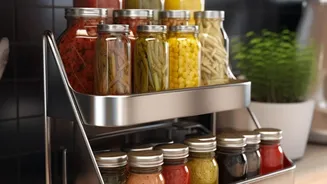
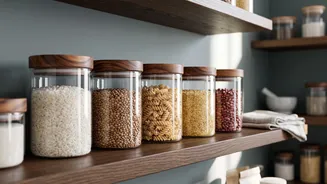
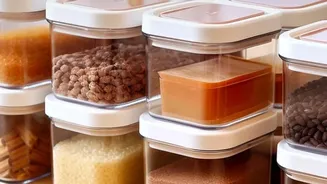
The single most effective way to prevent pantry pests is to upgrade your storage. Cardboard boxes and the original paper or plastic bags for flour, rice, and lentils are not secure. Immediately transfer all dry goods into airtight containers made of glass, metal, or thick, sturdy plastic. Look for options with silicone gaskets and locking lids, which create a seal that blocks both entry and the food scents that attract pests. Using clear containers also allows you to see the contents at a glance, making it easier to spot any potential issues early and monitor your stock levels. This simple transfer of goods from their store packaging into secure containers is a non-negotiable step for a pest-free kitchen.
The Power of a Deep Clean
If you discover an infestation, a thorough clean is essential. First, empty your pantry completely. Inspect every single item and discard anything showing signs of pests, like webbing or live insects. Seal infested items in a bag and remove them from your home immediately. For items that seem clear, consider freezing them for at least four days to kill any hidden eggs or larvae. Next, vacuum every shelf, paying close attention to corners and crevices where eggs can hide. Finally, wash all surfaces with hot, soapy water or a solution of vinegar and water. Do not use harsh pesticides, as they can be dangerous near food. This deep clean removes both the pests and the food debris they feed on.
Maintaining a Pest-Free Pantry
Prevention is an ongoing process. Adopt a “first in, first out” system, using up older ingredients before opening new ones to ensure nothing sits forgotten for too long. Avoid over-buying; purchase smaller quantities of items like flour and spices that you can use within a few months. For an extra layer of natural defence, place a few dried bay leaves in your containers of flour and rice, or on the pantry shelves. Pests dislike the scent of the essential oils in bay leaves, making it a safe and natural repellent. Regular clean-ups of spills and crumbs will also make your pantry less attractive to any would-be invaders.