


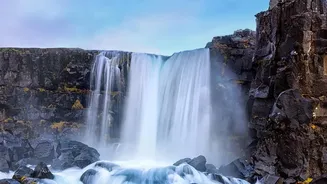
Goðafoss: The Waterfall of the Gods
Located in North Iceland and easily accessible from the Ring Road, Goðafoss is a spectacular, crescent-shaped cascade with significant historical importance. While popular, its sheer width and multiple viewpoints on both sides of the river allow for a less
crowded experience than some southern counterparts. The name, meaning "Waterfall of the Gods," is tied to the legend of Iceland's conversion to Christianity around 1000 AD. For a slower visit, arrive at sunrise or late in the evening. The low light illuminates the spray, creating an ethereal atmosphere, and you’ll likely share the view with only a handful of others, allowing you to absorb the powerful sounds and sights in peace.
Dynjandi: The Jewel of the Westfjords
For a true escape, head to the remote Westfjords to see Dynjandi. Its name means "Thunderous," and the title is well-earned. This is not a single waterfall but a breathtaking series of seven cascades, with the main, 100-meter-tall fall fanning out like a bridal veil. Its remote location naturally limits crowds, making it an ideal destination for slow travel. A 15-minute hike takes you up past the smaller falls to the base of the main event, with each step offering a new perspective of the falls and the stunning Arnarfjörður fjord below. This journey is as much a part of the experience as the waterfall itself, encouraging a patient appreciation of the raw, untamed landscape.
Hraunfossar: The Lava Falls
Hraunfossar in West Iceland offers a completely different kind of beauty. Instead of a powerful plunge, it’s a series of countless small streams that emerge from beneath the edge of a vast lava field, trickling into the turquoise Hvítá river below. The effect is gentle, serene, and utterly unique. It stretches over 900 meters, so there's plenty of space to find a quiet spot for contemplation. A short, accessible walking path connects it to the nearby Barnafoss, or "Children's Falls," a more turbulent cascade rushing through a narrow gorge. Hraunfossar is less about drama and more about the delicate interplay between water, rock, and moss, making it a perfect stop for a quiet, reflective afternoon.
Bruarfoss: Iceland's Bluest Waterfall
Often called "Iceland's Bluest Waterfall," Bruarfoss is famous for the almost impossibly vibrant blue of its glacial water. While a new car park has made access much easier, the best way to experience it slowly is by taking the original hiking trail. This 7-kilometer round-trip path follows the Brúará river and leads you past two smaller, beautiful waterfalls, Hlauptungufoss and Midfoss, before you reach the main attraction. The hike itself filters out the tour bus crowds, rewarding those who make the effort with a more intimate experience. The final view of the water converging in a deep, narrow, U-shaped gorge is a magnificent payoff for a few hours of mindful walking.
Kvernufoss: The Hidden Neighbour
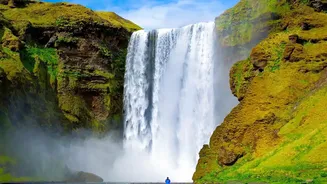
While thousands flock to the mighty Skógafoss on the South Coast, its nearby sibling, Kvernufoss, remains a relative secret. Tucked away in a small, mossy canyon, this 30-meter waterfall is often overlooked by tourists. Reaching it requires a short 15-minute walk from the Skógar Museum car park, a small effort that ensures it stays peaceful. The best part is that, much like the more famous Seljalandsfoss, you can walk behind the curtain of water. Standing in the misty cavern behind Kvernufoss, looking out through the spray without the usual crowds, is the very definition of a perfect slow travel moment.