




Start With the Best Ingredients
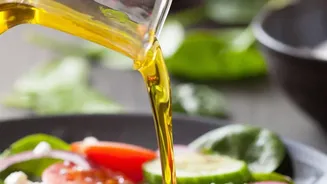
The quality of your dressing is entirely dependent on the quality of your ingredients. For the best flavour, always use fresh lemon juice. While bottled juice works in a pinch, it can sometimes have a flat or slightly bitter taste. When it comes to oil,
extra virgin olive oil is a classic choice because its fruity, peppery notes complement the lemon beautifully. The key is to use an oil you enjoy the taste of on its own. Some recipes suggest a lighter olive oil or even a neutral oil like avocado if you want the lemon flavour to be more dominant. A good rule of thumb: if you would not enjoy the oil by itself, you will not enjoy it in your dressing.
Master the Golden Ratio
The traditional ratio for a vinaigrette is three parts oil to one part acid. For a basic lemon dressing, this means if you use 1/4 cup of lemon juice, you would use 3/4 cup of olive oil. This 3:1 ratio creates a balanced dressing that is not overwhelmingly sharp. However, this is just a starting point. If you prefer a tangier dressing, you might shift to a 2:1 ratio. For delicate greens, a mellower 4:1 ratio might be better. Do not be afraid to taste and adjust until you find the perfect balance for your palate and your specific salad.
The Secret to a Creamy Dressing: Emulsification
Oil and acid do not naturally mix. The key to a smooth, cohesive dressing is emulsification—the process of forcing these two liquids to combine. The easiest way to achieve this is with an emulsifying agent. Dijon mustard is the most common choice; it not only adds a tangy depth of flavour but also contains natural emulsifiers that help bind the dressing. A touch of honey or maple syrup can also act as both a sweetener and a mild emulsifier. To create the emulsion, you can either whisk the ingredients in a bowl, pouring the oil in a slow, steady stream, or simply combine everything in a jar with a tight-fitting lid and shake vigorously for about 30 seconds. The jar method is incredibly fast and perfect for a 15-minute salad prep.
Balance Flavours Beyond Lemon
A truly great dressing has layers of flavour. Salt is essential, as it enhances all the other ingredients. It is best to dissolve the salt in the lemon juice before adding the oil, as salt does not dissolve well in fat. A little sweetness from honey or maple syrup can counteract the sharpness of the lemon and the bitterness that some olive oils have. Freshly grated garlic or finely chopped shallots add a savoury kick. For extra aroma and complexity, consider adding lemon zest (be careful to only use the yellow part, as the white pith is bitter) or a pinch of fresh or dried herbs like thyme, oregano, or dill.
How to Fix Common Problems
Is your dressing too bitter? This can happen if you squeeze the lemon too hard and extract bitterness from the white pith, or if your olive oil has a very strong, bitter profile. A small touch of honey or maple syrup can often correct this. Is it too acidic or tangy? Whisk in a little more olive oil to mellow it out. If the garlic flavour is too strong, you can also dilute it with more oil and a little more lemon juice. The best part about making your own dressing is that you have complete control to adjust it until it is perfect.
Make It Ahead for Even Faster Salads
One of the best tips for quick salads is to have your dressing ready to go. You can make a larger batch of lemon vinaigrette and store it in an airtight container or jar in the refrigerator for up to a week, with some sources saying it can last even longer. The olive oil may solidify when it gets cold, causing the dressing to separate or look clumpy. This is completely normal. Simply let the jar sit at room temperature for 15-20 minutes, then shake it well to re-emulsify before dressing your salad.