






An Art Form Fueled by Physics
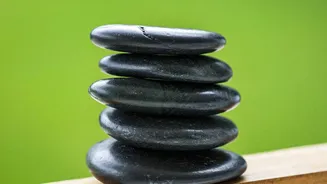
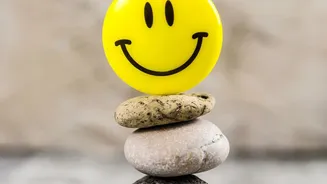
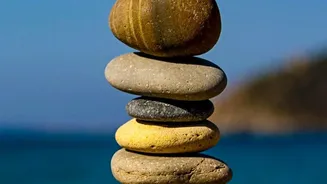
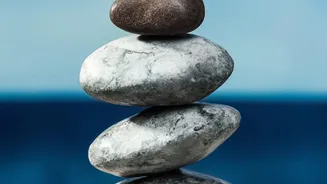
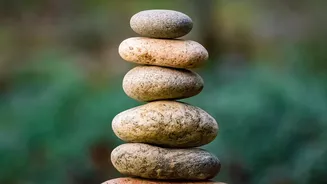
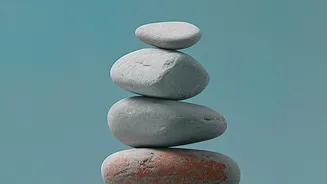
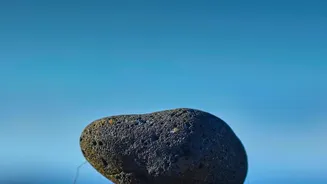
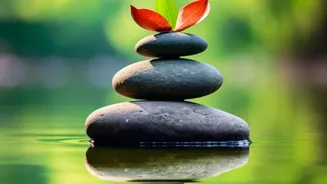
At its core, stone balancing is the art of stacking rocks without any adhesives or supports. It’s a delicate dance with physics. Practitioners aren't using tricks; they are patiently searching for natural points of contact—often three tiny points that
create a stable tripod—where a rock can rest in equilibrium. This process can take minutes or hours. The goal is to find the unique center of gravity for each stone and align it perfectly over the foundation below. It is this patient search, this feeling for the moment the rock “clicks” into place, that defines the activity. It's an act of pure presence, turning a simple pile of rocks into a temporary sculpture that seems to defy logic.
A Meditative State of Mind
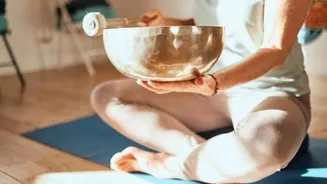
Many who practice stone balancing describe it as an active form of meditation. The intense concentration required silences the endless chatter of the mind. As you become engrossed in feeling for the subtle shifts in weight and the almost imperceptible moment of balance, external distractions fade away. This creates a state of 'flow,' where you are fully immersed in the present moment. Proponents note that this practice reduces stress and anxiety by providing a singular, tangible focus. The repetitive, gentle motion of testing and placing stones can be profoundly calming, connecting you to your surroundings and offering a respite from daily pressures.
Training Focus and Fine Motor Skills
Beyond the mental calm, stone balancing offers tangible benefits for physical control. The activity is an excellent training ground for enhancing concentration and hand-eye coordination. You must maintain intense focus to perceive the minute adjustments needed. This demand for precision directly translates to better motor skills and dexterity. Handling stones of various shapes and weights, and placing them with exacting care, refines your sense of touch and spatial awareness. It’s a physical puzzle that requires a steady hand and an unwavering gaze, strengthening the neural pathways responsible for focus and physical coordination over time.
How to Begin Your Balancing Journey
Getting started is simple, as the beauty of stone balancing lies in its accessibility. Begin in a quiet outdoor space, whether a backyard, a park, or a beach. Start small. Instead of aiming for a tall, complex tower, try balancing just one rock on its end on a stable base. Pick a rock and feel its texture and weight. Try to find tiny divots or imperfections on the base rock that can act as an anchor. Be patient and approach it as play. The stones will fall, often repeatedly, and that’s part of the process of learning to let go of expectations and frustration. Listen to the feel of the rock; with practice, your fingers will begin to sense the moment of stability just before you let go.