


The Planet's Deep Rumblings
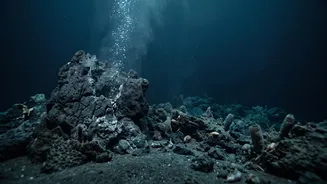
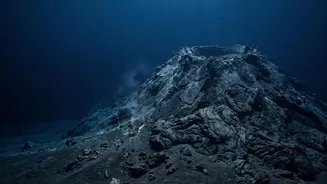
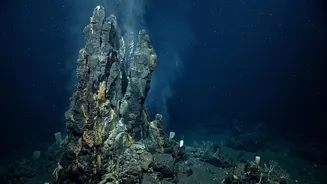
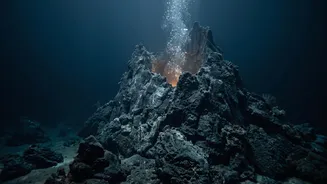
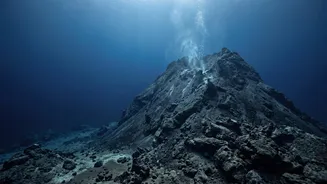
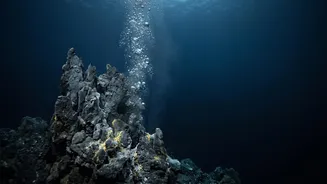
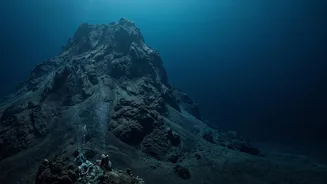
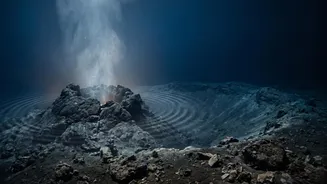
When we picture a volcano, we often imagine a mountain on land spewing ash and lava. Yet, the vast majority of Earth's volcanic activity happens sight unseen, deep beneath the ocean's surface. These submarine volcanoes are notoriously difficult to monitor.
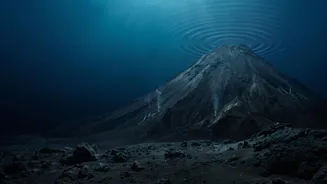
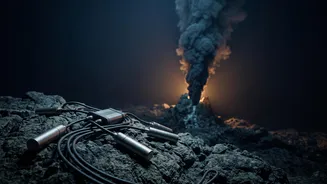
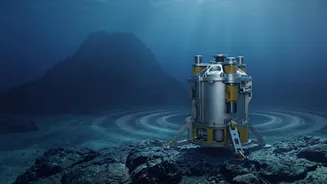
Recently, however, the sounds they produce have become a major focus for scientists. These are not random noises. The rumbles, pops, and booms are the acoustic fingerprints of powerful geological processes. They can be caused by magma moving, gas violently escaping, rocks fracturing under pressure, or even the explosive interaction when 1,200°C lava meets cold seawater. An isolated volcano on the ocean floor can act like a giant bell, radiating these sounds for thousands of kilometres. Special underwater microphones, called hydrophones, are used to listen in, capturing what satellites and traditional land-based seismometers might miss.
From Sound to Science
Hydrophones detect changes in water pressure, translating them into electrical signals that scientists can analyze. Some of these signals are known as T-waves (tertiary waves), which are created when seismic energy from an eruption is converted into sound that travels efficiently through the water. For years, researchers have used these acoustic clues to detect and locate underwater eruptions. But the goal is evolving from mere detection to prediction. The challenge lies in distinguishing the normal hum of an active volcano from the specific sounds that signal an imminent and dangerous event. By building a library of these volcanic sounds, scientists hope to identify patterns—a crescendo of explosions or a unique frequency—that could serve as a reliable alert before a major eruption occurs.
Lessons from the Hunga Tonga Eruption
The massive eruption of the Hunga Tonga-Hunga Ha'apai volcano in January 2022 provided a powerful, if tragic, case study. The event, which sent pressure waves around the globe, was a wake-up call. While initial explosions generated small tsunamis, a far more destructive wave struck Tonga over an hour later, with run-ups reaching up to 40 metres in some places. Researchers analysing hydrophone and seismic data discovered that this devastating tsunami was not caused by the initial blast, but by the sudden collapse of the volcano's caldera afterwards. Crucially, this collapse produced a massive and distinct underwater sound signal that was detected up to 2,600 km away. This sound wave travelled through the ocean at about 1.5 kilometres per second—more than seven times faster than the tsunami it generated. This discovery suggests that if we can detect such a 'collapse' sound in real-time, it could provide a precious window of warning.
The Challenge of Early Warnings
Despite these breakthroughs, creating a reliable acoustic-based warning system is a formidable task. The ocean is a noisy place, and scientists must filter out the sounds of shipping, marine life, and weather to isolate the volcanic signals that matter. Furthermore, monitoring networks would need to be sophisticated enough to not only detect a signal but also pinpoint its origin and size almost instantly to be useful. Hundreds of submarine volcanoes are scattered across the Pacific's "Ring of Fire" alone, many in remote areas that are difficult to instrument. Predicting eruptions remains an imperfect science. For example, scientists who successfully forecast the 2015 eruption of Axial Seamount off the US coast later predicted another eruption in 2025 that did not happen, forcing them to revise their models. This illustrates the immense complexity of forecasting the behaviour of these sleeping giants.