

What Exactly Is Floating Yoga?
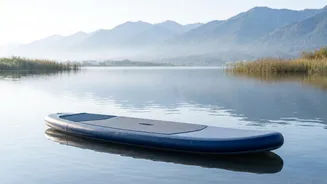
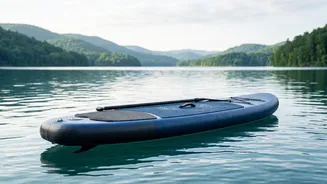
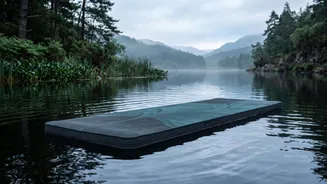
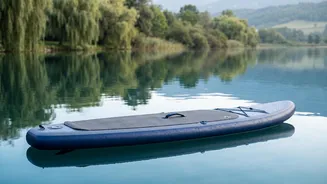
Floating yoga, most commonly known as Stand-Up Paddleboard (SUP) yoga, is the practice of performing traditional yoga poses on a paddleboard in a calm body of water like a lake or bay. Instead of a predictable, solid mat, your foundation is constantly
in subtle motion. This isn't just a novelty; it’s a fundamental shift in the practice. It combines the physical and mental benefits of yoga with the serene, engaging environment of the outdoors, creating an experience that is both a workout and a mindful retreat. For many, it’s a way to break from the routine of a studio and connect more deeply with both nature and their own physical presence.
The Unstable Surface Is the Point
In a typical yoga class, the floor is a given—it’s solid and dependable. In SUP yoga, the instability of the board is the central feature. This forces a level of engagement that a stable surface simply can't replicate. Every breath and every slight shift in weight is amplified by the water, requiring constant, subtle corrections to maintain balance. This isn't a flaw in the practice; it's the very thing that makes it so effective. The board’s movement turns even the simplest of poses into a full-body exercise in stability, demanding a heightened state of awareness from head to toe.
A Masterclass in Proprioception
SUP yoga is a powerful tool for enhancing proprioception—your body's innate ability to sense its own position, movement, and orientation in space. This 'sixth sense' relies on feedback from receptors in your muscles and joints. By practicing on an unstable surface, you challenge this system intensely. Your central nervous system has to work overtime to process the board's feedback, forcing your stabilizing muscles to make constant micro-adjustments to keep you upright. This process sharpens your body awareness, improves your coordination, and makes your movements more efficient both on and off the board.
Your Core Will Thank You
While traditional yoga certainly engages the core, SUP yoga takes it to another level. To stay balanced on the moving board, you must constantly engage your deep core muscles, including your abdominals, obliques, and back. These muscles work nonstop to stabilize your spine and transfer force through your body. This constant activation means you're getting a significant core workout throughout the entire session, which can lead to improved posture, reduced back pain, and greater overall functional strength. Even seemingly simple poses require a new level of core control when performed on water.
Finding Focus on the Water
The mental benefits of floating yoga are just as profound as the physical ones. The immediate consequence of a wandering mind is often a splash into the water. This reality forces a state of deep focus and presence. You have to pay close attention to your breath and the subtle sensations in your body to maintain balance, leaving little mental space for everyday worries. This single-minded concentration creates a meditative state, connecting you to the present moment, the feel of the sun, and the sound of the water, which can significantly reduce stress and enhance mental clarity.
Tips for Your First Floating Session
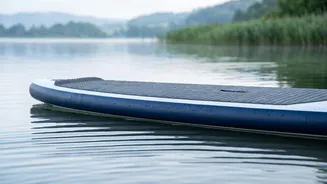
If you're ready to try it, a few tips can make your first experience smoother. Start with a wider board, which offers more stability. Keep your gaze fixed on a stable point on the horizon rather than looking down at the moving water, as this helps with balance. Widen your stance in poses for a more stable base, and don't be afraid to start with simpler, seated postures to get a feel for the board. Most importantly, embrace the experience. Falling in is often part of the fun and a great way to cool off. The goal isn't perfection, but presence and play.