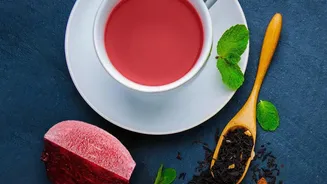







What Exactly Is Rooibos?
Often called 'red tea' or 'red bush tea', rooibos isn't technically a tea at all. It's an herbal infusion, or tisane, made from the leaves of the Aspalathus linearis shrub, which grows exclusively in South Africa's Cederberg mountain region. For centuries,
it has been a traditional beverage for indigenous communities. The leaves are harvested, bruised, and then fermented, which develops their characteristic reddish-brown colour and enhances their sweet, earthy flavour. There is also a green, unfermented version that has a milder taste and contains even more antioxidants.
The Caffeine-Free Advantage
One of the most significant attributes of rooibos is that it is naturally 100% caffeine-free. Unlike black, green, and oolong teas, which all come from the caffeine-containing Camellia sinensis plant, the rooibos shrub produces no caffeine whatsoever. This makes it an ideal choice for anyone sensitive to stimulants, pregnant women, children, or those simply looking for a soothing drink to enjoy in the evening without it affecting their sleep. For those with sensitive stomachs, avoiding caffeine can also mean avoiding the potential for gastric irritation or acid reflux that it can sometimes cause.
The Link to Digestive Comfort
The traditional use of rooibos for calming stomach ailments is now being explored by modern science. The potential benefits are thought to come from its unique cocktail of antioxidants and flavonoids, such as aspalathin, quercetin, and luteolin. Research suggests these compounds may help reduce inflammation in the gastrointestinal tract. Since chronic inflammation can contribute to digestive discomfort, regular consumption of rooibos might help promote a calmer gut environment. Furthermore, rooibos is low in tannins, compounds found in regular tea that can sometimes interfere with the absorption of nutrients like iron and cause digestive issues for some people.
Soothing Stomach Spasms
One of the most promising areas of research is the antispasmodic effect of rooibos. Some studies have shown that certain compounds in the tea can help relax the smooth muscles of the gut. This action is believed to work by helping to balance potassium and calcium ion channels in the intestinal wall, which can ease painful stomach cramps and spasms. This quality is why rooibos has been traditionally used to soothe everything from abdominal cramps to colic in infants, and it may offer relief for those with hyperactive gut disorders like IBS or diarrhoea.
Nourishing Your Gut Microbiome
A healthy digestive system relies on a thriving community of beneficial bacteria, known as the gut microbiome. Emerging research suggests that the polyphenols in rooibos may act as prebiotics, essentially providing food for these good bacteria. By supporting the growth of beneficial microbes, rooibos may help improve overall gut health, leading to better nutrient absorption and reduced bloating. Studies have found that both red and green rooibos can play a role, with green rooibos potentially being better at strengthening the gut barrier and red rooibos showing more anti-inflammatory action.