





The Heart of the Planet
Deep inside Earth lies a core with two parts: a solid inner sphere of iron and nickel, and a liquid outer layer surrounding it. This outer core, a superheated ocean of molten metal about 2,200 kilometres thick, is in constant motion. This churning, swirling
liquid acts like a giant dynamo, generating powerful electric currents. These currents, in turn, create Earth's magnetic field, a protective shield that extends far into space. This magnetic field is vital for life, deflecting harmful solar radiation and protecting our atmosphere. Without it, Earth’s surface and our technological infrastructure would be far more exposed.
An Unexpected Reversal
For many years, scientists studying the planet's magnetic field inferred that the flow within the outer core was relatively stable, generally moving westward. But new analysis has revealed a dramatic and unexpected shift. In 2010, a huge section of this molten river, deep beneath the Pacific Ocean, suddenly changed course. What was once a weak westward drift transformed into a strong eastward flow. This abrupt reversal has challenged long-held assumptions about the behaviour of Earth's deep interior, which was previously thought to be a much more stable system.
Our Eyes in the Sky
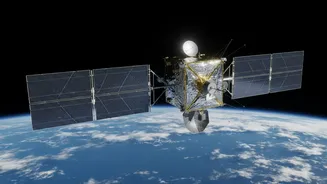
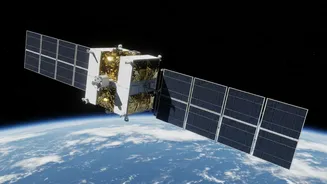
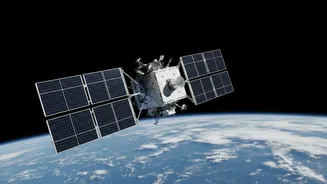
So how can we possibly know what’s happening 3,000 kilometres beneath the surface? The answer lies in space. While we can't see the core directly, we can measure its effects. The European Space Agency's (ESA) Swarm mission, a constellation of three highly sensitive satellites launched in 2013, is designed to do just that. These spacecraft carry instruments called magnetometers that map Earth's magnetic field with incredible precision. By carefully tracking tiny fluctuations and variations in the field over time, scientists can distinguish signals coming from the core from other magnetic sources and work backwards to model the flow of molten iron that creates them.
Connecting the Dots
By combining data from Swarm with observations from other satellites and ground stations dating back to 1997, researchers pieced together a timeline of this core-flow reversal. While the event happened before Swarm's launch, the mission's high-quality data has been crucial for understanding what happened next and how the core has behaved since. Interestingly, recent findings suggest the eastward surge may have peaked and has been weakening since 2020. This has led scientists to wonder if the reversal was a temporary wobble, part of a longer natural cycle, or the beginning of a new, stable pattern. Some researchers also hypothesise a link between this flow reversal in the outer core and a simultaneous change detected in the rotation of the solid inner core, suggesting a deep connection between different layers of Earth's interior.
Why It Matters for Us
While these deep-Earth processes pose no direct danger to people on the surface, they are fundamental to understanding the workings of our planet. The magnetic field is not static; it constantly evolves as the core flow changes. These shifts affect everything from our navigation systems, which rely on a predictable magnetic north, to the operation of satellites and the modelling of space weather. Being able to monitor and eventually understand these dynamics is a huge leap forward. This new window into the core provides invaluable data for refining our models of the geodynamo and the long-term evolution of our planet's most vital protective feature.