





The Magic of Roasting in Salt
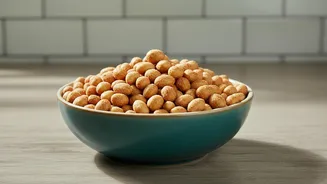
The quintessential crunch of authentic Khari Sing, particularly the kind famous in regions like Gujarat's Bharuch, comes from a method called salt-roasting. This isn't about making the peanuts excessively salty; it's about using hot salt as a cooking
medium. Unlike roasting in an oven or a pan, a bed of hot salt provides incredibly even and consistent heat. The salt completely surrounds each peanut, drawing out moisture uniformly and preventing the scorching that can happen with direct pan heat. This process dehydrates the peanut perfectly, leading to a deep, resonant crunch that develops as they cool. You get a thoroughly roasted nut that’s flavourful to its core, not just browned on the outside.
What You Will Need
The beauty of this recipe lies in its simplicity. You don't need fancy equipment, just a few kitchen staples. The primary items are a heavy-bottomed kadai or wok, coarse salt for roasting, raw peanuts (preferably with the red skin on), and a metal sieve. For the salt, any table salt will do, but a larger quantity is better as it holds and distributes heat more effectively. Don't worry about waste; this roasting salt can be cooled, stored, and reused multiple times. Good quality raw peanuts are crucial; varieties like the ones from Saurashtra are traditionally preferred for their taste and size.
The Home-Roasting Method
The process is a ritual of patience. First, many traditional recipes call for a quick pre-treatment of the peanuts. This can involve pressure cooking them for a single whistle or boiling them in salted water for a few minutes. This step partially cooks the peanuts and helps the salt flavour penetrate slightly. After this, the peanuts are strained and briefly dried on a towel. Next, heat a generous amount of salt (at least one to two cups) in your kadai over medium heat for about five minutes. Once the salt is hot, add the peanuts. You must stir continuously. Initially, the damp peanuts will cause the salt to clump and stick, but as they roast and dry, the salt will fall away. Keep stirring for 10-15 minutes until the peanut skins darken slightly and start to crack, and your kitchen fills with a wonderful nutty aroma.
Perfecting the Crunch and Finish
Knowing when the peanuts are done is key. They will continue to cook in the residual heat even after being removed from the salt. A good test is to take one or two peanuts out, let them cool for a minute, and then taste them. They should be crunchy and the skin should come off easily. Once you are satisfied, turn off the heat and immediately use a metal sieve to separate the peanuts from the hot salt. Spread the roasted peanuts in a single layer on a plate or tray to cool completely. This cooling phase is critical; it's when the final, satisfying crunch fully develops. The peanuts will not be overly salty, as most of the salt was just a medium for heat transfer.
Tips for Success
To ensure your homemade Khari Sing is perfect every time, keep a few things in mind. First, always use raw peanuts with the skin on for that classic taste and texture. Second, do not overcrowd the pan; roasting in batches might be necessary to ensure every peanut cooks evenly. Continuous stirring is not a suggestion, it's a requirement to prevent burning. Finally, storage is important. Once completely cooled to room temperature, store your Khari Sing in an airtight container. They can stay wonderfully crunchy for weeks, offering a perfect snack whenever the craving strikes.