

A New Generation of Cosmic Surveyor
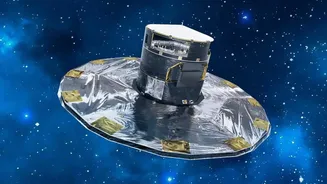
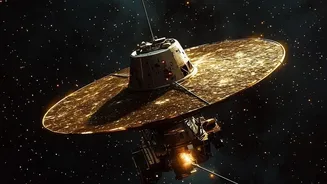
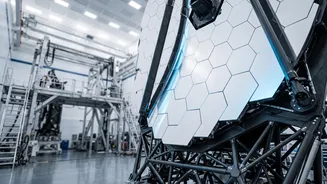
Named after NASA’s first chief of astronomy, Nancy Grace Roman, this next-generation observatory is designed not just to see farther, but to see wider. Following its successful launch on August 30, 2026, aboard a SpaceX Falcon Heavy, the telescope is now
on its journey to a stable orbit point 1.5 million kilometres from Earth. Its primary mission is to tackle some of the biggest questions in astrophysics today, including the mysteries of dark energy and dark matter, while simultaneously discovering thousands of new planets beyond our solar system. Unlike its predecessors, Roman is built for speed and scale, intended to map vast portions of the sky with incredible efficiency.
The Power of a Panoramic View
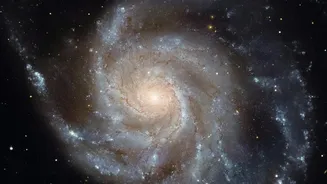
The defining feature of the Roman Space Telescope is its immense field of view. While its primary mirror is the same size as the Hubble Space Telescope's at 2.4 meters, its Wide-Field Instrument (WFI) can see an area of the sky at least 100 times larger. This means that in a single snapshot, Roman can capture an image containing millions of galaxies. To put it in perspective, where Hubble would need hundreds of individual images to map a small patch of sky, Roman can achieve a similar result in just a couple of pointings. This survey-oriented approach will allow it to generate enormous cosmic atlases, providing a wealth of data for astronomers to study everything from the structure of the universe to the distribution of stars in our own galaxy.
Hunting for Dark Energy and New Worlds
Roman has two primary scientific goals. The first is to probe the nature of dark energy, the mysterious force causing the universe to expand at an accelerating rate. By mapping the 3D distribution of millions of galaxies over cosmic time, scientists can measure how dark energy has shaped the universe's evolution. The second major goal is to conduct a massive search for exoplanets—planets orbiting other stars. Using a technique called gravitational microlensing, Roman is expected to discover thousands of new worlds, from large gas giants to small, rocky planets. This census will provide crucial statistics on planetary systems throughout the galaxy. The telescope also carries a technology demonstrator called the Coronagraph Instrument, designed to directly image Jupiter-like planets by blocking the overwhelming light from their host stars.
A Complement to Hubble and Webb
Roman is not a replacement for the Hubble or James Webb Space Telescopes (JWST), but a powerful complement. Think of Webb as the deep-diving zoom lens, peering with incredible sensitivity into the earliest moments of the universe, and Hubble as the versatile workhorse observing in multiple wavelengths of light. Roman, in contrast, is the wide-angle camera, capturing the big picture. While Webb might spend hours studying a single, distant galaxy in exquisite detail, Roman will survey millions of them to understand population-level trends. Its ability to quickly survey the sky will identify interesting targets that Webb or Hubble can then follow up on for more detailed observations, creating a powerful scientific synergy between NASA's great observatories.