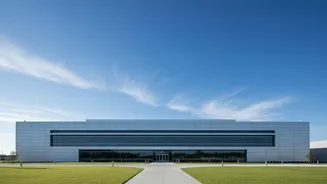









A New Gold Rush for AI Infrastructure
The primary engine behind this massive spending increase is the unprecedented investment in the building blocks of artificial intelligence. According to Gartner's latest forecast, spending on data centre systems is projected to be the fastest-growing
segment, skyrocketing by 62.5% to reach $822 billion in 2026. This isn't just about buying more servers; it's a fundamental overhaul to support complex AI workloads and high-performance computing. John-David Lovelock, a distinguished analyst at Gartner, described the effort as "the largest infrastructure project ever attempted by humanity." Hyperscale cloud providers and large enterprises are in a race to expand their data centre capacity to power the next generation of intelligent applications.
Software and Cloud Services Dominate Budgets
While hardware grabs headlines with explosive growth, the largest share of the IT budget will go towards software and IT services. Software spending is forecast to grow 15.5% to $1.47 trillion, while IT services will reach $1.57 trillion. This highlights a dual trend: companies are not only buying the infrastructure for AI but also the intelligent applications and cloud services that run on it. Spending on Infrastructure as a Service (IaaS)—the cloud infrastructure offered by giants like Amazon Web Services, Microsoft Azure, and Google Cloud—is expected to climb by 29.3% to $287 billion. This shows that the move to the cloud is accelerating, driven by the need for flexible, scalable computing power for AI development and deployment.
Not a Rising Tide for All
Despite the record-breaking total, Gartner cautions that the benefits are not evenly distributed across the tech industry. The growth is heavily concentrated in AI-related segments. Meanwhile, other areas face headwinds. Technology budgets are being strained by inflation, supply shortages for components like high-performance memory, and rising hardware costs. The market for devices, such as PCs and mobile phones, is expected to see more modest growth of 9.8% to $868 billion. This suggests a multi-speed IT market where companies are shifting priorities and funnelling funds towards AI initiatives, sometimes at the expense of more traditional tech spending.
Implications for India's Tech Sector
These global trends have significant implications for India, a powerhouse in the global IT services market. The massive growth in spending on IT services and software presents a huge opportunity for Indian technology firms that specialise in application implementation, managed services, and digital transformation projects. As global enterprises ramp up their investment in AI and cloud, they will increasingly rely on partners to execute these complex projects. This will drive demand for skilled tech talent in India, particularly in areas like AI engineering, cloud architecture, and data science. Furthermore, Indian enterprises themselves are part of this trend, increasing their own IT budgets to adopt new technologies, improve efficiency, and stay competitive on the global stage.