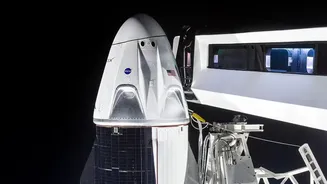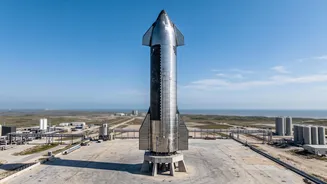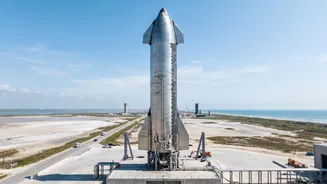



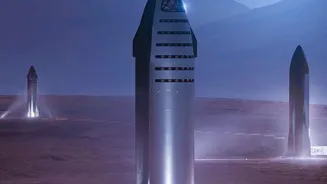
In a dramatic flight that perfectly captured the high-risk, high-reward nature of modern space exploration, SpaceX achieved a monumental first by catching its Starship spacecraft while simultaneously gathering crucial data from an aborted booster landing.
A Groundbreaking Catch, A Planned Detour
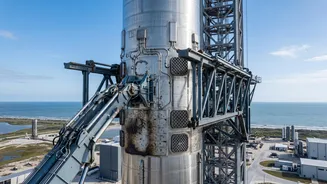
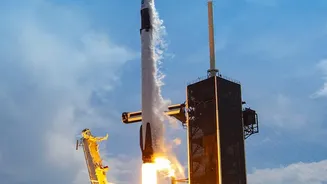
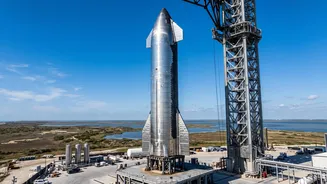
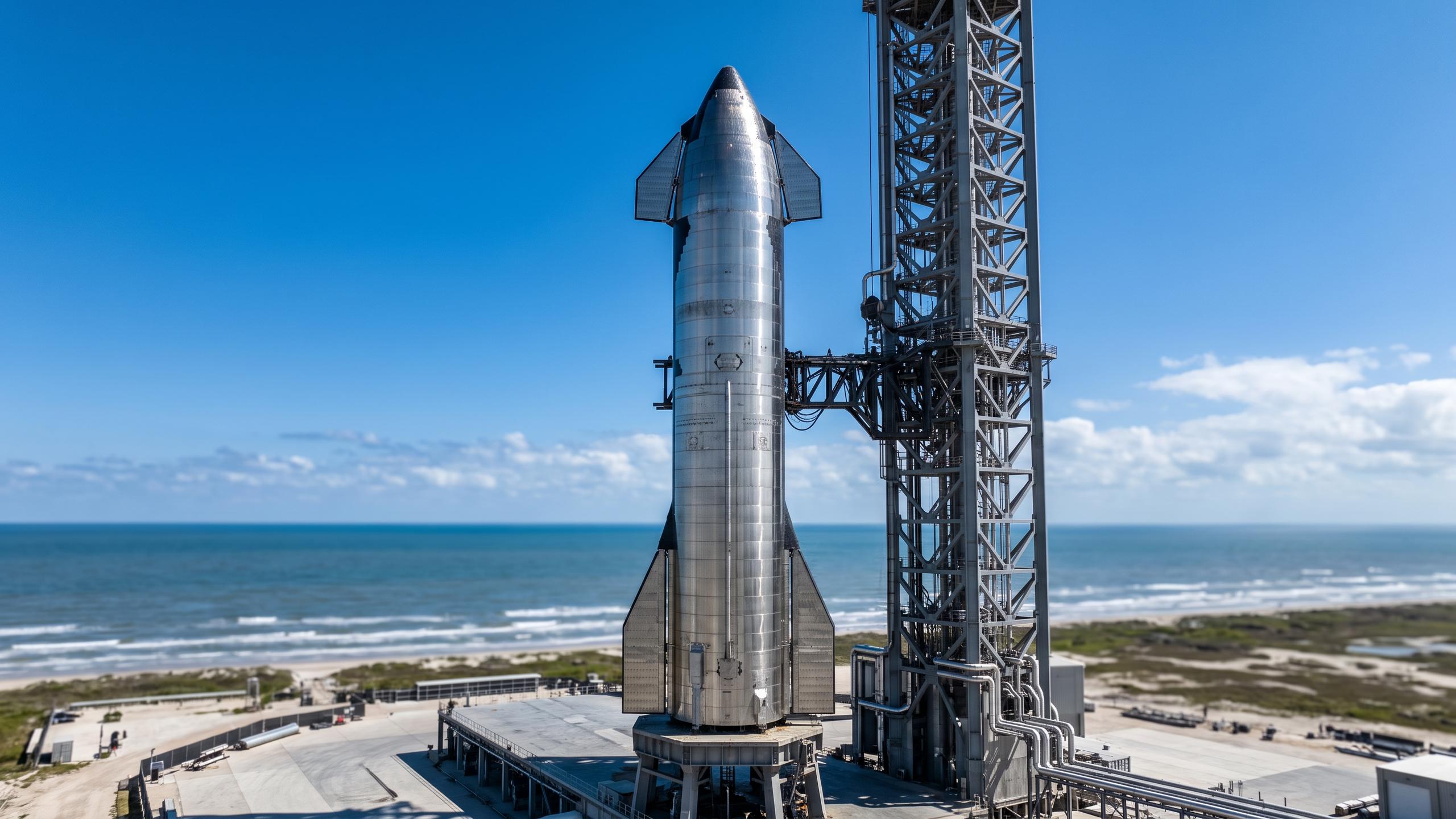
The latest test of the world's most powerful rocket system was a tale of two outcomes. On one hand, history was made as the Starship upper stage, after spending over 22 hours in orbit, successfully returned to its South Texas launch site and was caught by the giant mechanical arms of the launch tower. This manoeuvre, never before accomplished with an orbital-class upper stage, is a critical milestone. On the other hand, the mission's first stage, the Super Heavy booster, did not make it back to the tower. Shortly after separating from Starship, an automatic abort was triggered during its boost-back burn, causing it to divert for a controlled splashdown in the Gulf of Mexico. While not the desired result, the controlled abort prevented the loss of the vehicle over land and provided invaluable data for future attempts.
The 'Holy Grail' of Reusability
For SpaceX, the ultimate goal is not just to reach space, but to make accessing it as routine and affordable as air travel. Central to this vision is full, rapid reusability. Unlike its workhorse Falcon 9 rocket, where only the first-stage booster is recovered, the Starship system is designed for both the Super Heavy booster and the Starship spacecraft to be caught, refuelled, and launched again in short order. This 'catch' is performed by the launch tower's massive arms, nicknamed 'chopsticks'. By eliminating the need for heavy landing legs on the vehicle and ocean recovery operations, SpaceX aims to drastically reduce turnaround time and mission costs, unlocking an 'airplane-like cadence' of launches. Successfully catching the Starship spacecraft proves this audacious concept is viable, a feat one SpaceX official called the 'Holy Grail of space flight'.
Why the Booster Recovery Was Aborted
The Super Heavy booster's journey back to the launch pad was cut short by its own safety systems. According to SpaceX, the burn needed to reverse its course and head back to the Texas coast ended early due to what was believed to be a low propellant reading. The guidance system then automatically triggered an abort, redirecting the massive booster to a safe splashdown zone over the Gulf of Mexico. This was the first flight test for this version of the booster, and such anomalies are not entirely unexpected. While the catch was unsuccessful, the booster demonstrated controlled flight and landing procedures, providing engineers with a trove of information to analyze. The company is now investigating the root cause to ensure the issue is resolved for subsequent flights.
Data is King in Iterative Design
This mixed result is a feature, not a bug, of SpaceX's development philosophy. The company famously employs a rapid iterative design process, often described as 'build, test, learn'. This approach contrasts sharply with traditional aerospace, which often spends years in analysis and simulation before building hardware. SpaceX prefers to test real hardware to its limits, accepting that some tests will result in failures or aborted manoeuvres. Each 'failure' provides high-fidelity data that cannot be gained from simulations alone, allowing engineers to quickly identify and fix 'unknown unknowns'. From this perspective, the aborted booster recovery is not a disaster but a data point that moves the entire system closer to reliability. The company has a long history of learning from anomalies, a process that eventually led to the routine and reliable landing of its Falcon 9 boosters.
The Road Ahead for Starship
With the successful catch of the Starship upper stage, SpaceX has proven that half of its reusability challenge is solvable. The next logical step is to replicate that success while also perfecting the booster catch on the same flight. During its time in orbit, this Starship vehicle also deployed 26 Starlink satellites, demonstrating its capability as a commercial launch platform. Analysts suggest SpaceX is now years ahead of its competitors in rocket recovery technology. The progress of the Starship program is being watched closely, not just by competitors but by NASA, which holds a contract with SpaceX to use a version of Starship as the lunar lander for its upcoming Artemis missions to the Moon. The next flight will be aimed at combining both successful recoveries, bringing the dream of a fully reusable rocket system one step closer to reality.