
A Cosmic Mystery in Orion
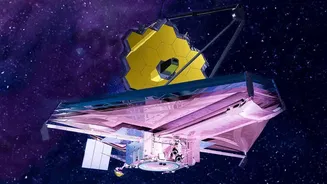
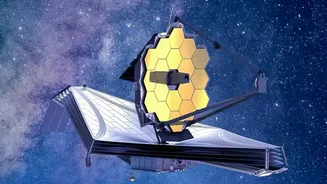
Deep within the beautiful, chaotic stellar nursery of the Orion Nebula, the James Webb Space Telescope (JWST) has identified something that shouldn't exist. While scanning the region, approximately 1,350 light-years from Earth, astronomers found dozens
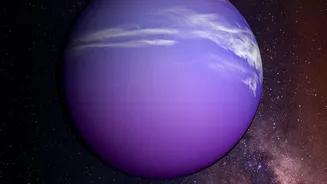
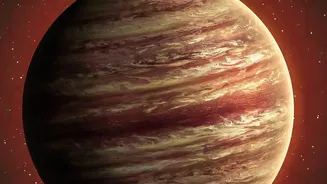
of pairs of objects, each with a mass similar to Jupiter, that are not orbiting a star. Instead, they orbit each other, dancing together in the darkness of space. Scientists have nicknamed them Jupiter-Mass Binary Objects, or JuMBOs. In total, Webb spotted over 540 of these free-floating planetary-mass objects, but it was the 42 pairs that truly baffled researchers, representing a find that was highly unexpected.
The Objects That Defy Explanation
The existence of JuMBOs presents a major headache for current theories of both star and planet formation. According to our standard models, there are two main ways to make a planet. The first is 'bottom-up' inside a disk of gas and dust surrounding a young star, where material slowly clumps together over millions of years. The second is 'top-down' like a star, where a dense cloud of gas collapses under its own gravity. However, current physics suggests that these collapsing clouds can't form objects as small as a Jupiter-mass planet. Furthermore, while planets can be violently ejected from their home solar systems to become 'rogue planets', this process is thought to be so chaotic that it would surely break apart a loosely bound pair like a JuMBO. The sheer number of these pairs found by Webb makes a fluke ejection scenario seem highly improbable.
Rewriting the Planetary Playbook
This discovery forces scientists back to the drawing board. How could these objects have formed? One leading new theory, supported by powerful computer simulations, suggests that JuMBOs might be born from a different kind of ejection event. In the crowded, dynamic environment of a young star cluster like Orion, close encounters between stars can be common. A simulation run by astrophysicists at UNLV showed that if a passing star flies by a system with two giant planets, it can disrupt their orbits and eject both of them together, allowing them to remain gravitationally bound to each other as they drift into space. This model suggests that free-floating binary planets might be far more common than anyone previously imagined, formed in the violent early days of stellar nurseries.
A New Category of Celestial Body?
JuMBOs are so strange that they blur the lines between planets and stars. They are too small to be stars, lacking the mass to ignite nuclear fusion in their cores. But since they don't orbit a parent star, they don't fit the conventional definition of a planet either. These objects are gassy, hot, and exist in a grey area that challenges our classification systems. Some astronomers argue that this discovery may herald the existence of an entirely new astronomical category. For now, they serve as a powerful reminder that the universe is more complex and diverse than our models predict. The study of JuMBOs is not just about understanding these specific objects, but about refining our fundamental knowledge of how all cosmic bodies, from the smallest planets to the largest stars, come into being.
What This Means for Future Astronomy
The discovery of JuMBOs is just the beginning. It opens a new field of inquiry for astronomers and provides a perfect test case for theories of planetary dynamics. Future observations with the JWST will be crucial in gathering more data on these enigmatic pairs. By studying their orbits, temperatures, and atmospheric compositions—which Webb has already identified as containing water and methane—scientists hope to find more definitive clues about their origin. Are they the result of ejections from planetary systems, or do they form through a completely unknown mechanism? Each new observation will help refine our models and could lead to an even deeper understanding of how planetary systems evolve. This unexpected find underscores the incredible power of the JWST to not only answer old questions but to pose entirely new ones that push the boundaries of our knowledge.