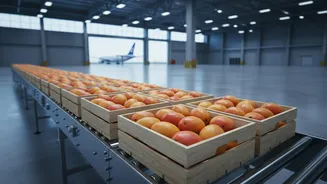








A Perishable Problem
The king of fruits has an Achilles' heel: a very short shelf life. Mangoes are delicate and highly perishable, making their journey from orchard to fruit bowl a logistical challenge. Traditional transport by road or sea, while cost-effective for durable
goods, can take days or weeks. For a fruit that ripens quickly, this long transit time means a higher risk of spoilage, loss of flavour, and reduced market value. Farmers often have to harvest their produce prematurely to account for the travel time, which can compromise the final taste and quality. This race against ripeness has historically limited the reach of premium, tree-ripened mangoes to distant markets, both domestic and international.
The Air-Freight Revolution
Enter air cargo, a solution that drastically cuts down transit time from days to mere hours. By flying mangoes directly from airports like Kempegowda International Airport in Bengaluru, producers can get their fruit to markets across the country and the globe with unprecedented speed. This logistical shift is a game-changer. It means mangoes can be picked closer to their peak ripeness, preserving their natural sweetness and aroma. For consumers, this translates to a superior product. For farmers and exporters, it opens up new, lucrative markets that were previously inaccessible for their most delicate, high-value varieties. The success of this strategy is evident in the growing export numbers, with Bengaluru's airport reporting significant year-on-year increases in mango shipments.
Boosting Late-Season Varieties
The benefits of air shipment have been particularly highlighted by recent exports of late-season varieties. For the first time in July 2026, a consignment of Karnataka's Neelam and Totapuri mangoes was air-freighted to the Maldives. These varieties, harvested from late June to the end of July, can extend India's mango export season beyond its typical peak. Previously, farmers of these varieties, especially Totapuri, faced low prices in local markets. However, the air-export opportunity has allowed them to fetch significantly higher prices, in some cases earning more than ten times the local rate for their produce. This initiative, facilitated by bodies like the Agricultural and Processed Food Products Export Development Authority (APEDA), is a crucial step in diversifying India's mango export basket.
A Sweet Deal for Farmers
Ultimately, the shift to air freight provides a much-needed economic boost to the growers. By connecting them more directly to global markets, it allows them to bypass multiple intermediaries and secure better prices. Farmer Producer Companies (FPCs) play a vital role here, aggregating produce from small farms to create export-quality consignments. This organized approach ensures quality control and strengthens the supply chain. Recent exports to the Maldives saw farmers realise over 50% higher returns compared to selling in domestic markets. This direct financial benefit not only improves livelihoods but also encourages farmers to invest in the high-quality cultivation practices required for export-grade fruits.
Navigating the Headwinds
While the strategy is promising, it is not without its challenges. Air freight is significantly more expensive than other forms of transport, and costs can be volatile. Surges in freight charges, sometimes influenced by global events, can squeeze profit margins for exporters and farmers. Furthermore, competition for cargo space on planes, especially with high-value goods like pharmaceuticals, means perishable items like mangoes can sometimes be offloaded, leading to costly delays and potential spoilage. Despite these hurdles, the clear advantage in quality and market access that air shipment provides is proving to be a powerful incentive for Karnataka's mango industry to continue investing in the sky-bound route.