







A Landmark Achievement
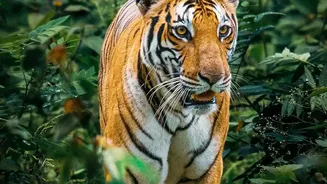
Nepal has cemented its status as a global leader in wildlife conservation with the announcement of its latest tiger census results. The new estimate of 429 tigers represents a remarkable increase from the 355 recorded in 2022 and nearly quadruples the 2009
population. The results were unveiled on Global Tiger Day, July 29, 2026, by the Department of National Parks and Wildlife Conservation, marking a moment of national pride and a significant contribution to the global goal of protecting this endangered species. This sustained growth places Nepal among a handful of countries that have not only stopped the decline of wild tigers but decisively reversed it, making it home to the third-largest wild tiger population on Earth, after India and Russia.
The Power of Collaboration
This success story wasn't an accident; it was built on a foundation of powerful partnerships. The core of Nepal's strategy involves a seamless collaboration between the government, international conservation organizations like the World Wildlife Fund (WWF), and, most critically, local communities. This people-centric approach has been vital. By involving communities living alongside the tigers in conservation efforts, the model transforms potential conflict into shared stewardship. Programs that provide alternative fuel sources to reduce forest dependency, and the establishment of community-based anti-poaching units, have been instrumental in protecting tiger habitats. This collaborative framework is most visible in the Terai Arc Landscape, a vast transboundary area shared with India that is crucial for tiger movement and genetic diversity.
Boots on the Ground
The strategy on the ground combines strict enforcement with scientific monitoring and habitat restoration. Coordinated anti-poaching patrols run by park officials and the Nepali Army have been critical in cracking down on the illegal wildlife trade. This is complemented by the tireless work of over 40,000 community members who serve as forest watchers and citizen scientists, providing an invaluable frontline defence for the tigers. Habitat management has been another key pillar. Nepal has succeeded in increasing its forest cover significantly over the past decades, creating more space for tigers and their prey. The protection and restoration of wildlife corridors allow tigers to move safely between national parks like Chitwan, Bardiya, and Parsa, which is essential for maintaining healthy, genetically diverse populations.
Success Breeds New Challenges
While the news is overwhelmingly positive, a growing tiger population brings its own set of challenges. As tigers expand their territories, human-wildlife conflict is an increasing concern. With more tigers and more people living in close proximity, encounters are becoming more frequent, sometimes with tragic outcomes for both humans and animals. In the last fiscal year, 10 people were killed in tiger attacks, a rise after several years of decline. Recognizing this, conservation partners are now intensifying their focus on coexistence strategies. Initiatives like predator-proof livestock enclosures, early-warning systems for communities, and programs to support the livelihoods of those affected by conflict are becoming more important than ever. In February 2026, the government and WWF launched a new multi-million dollar project specifically aimed at managing the human-tiger interface.
A Model for the World
Despite the challenges, Nepal's achievement offers a powerful and hopeful blueprint for conservation worldwide. The country's success demonstrates that it is possible to bring a keystone species back from the brink through sustained investment, political will, and deep community engagement. The numbers show uneven growth, with some parks like Parsa and Banke seeing dramatic increases, while Bardiya saw a slight decline, highlighting the need for adaptive management. Researchers believe factors like water availability and cross-border movement from India play a role in these population shifts. Ultimately, Nepal's journey proves that protecting wildlife is not separate from human development; it is intertwined with it, creating benefits for local economies through eco-tourism and healthier ecosystems for all.