




The New Space Race Is for Bandwidth
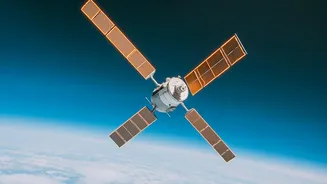
The orbital environment has transformed more in the last few years than in the previous six decades combined. As of late 2026, there are nearly 17,000 active satellites circling the Earth, a number that has grown by almost 30% in just one year. This explosive
growth is driven by the rise of commercial 'mega-constellations'—vast networks of hundreds or thousands of satellites designed to provide services like global high-speed internet. Companies like SpaceX, with its Starlink network, are the dominant players. Starlink alone accounts for roughly two-thirds of all active satellites, with over 11,000 in orbit and more launching almost every week. Other major initiatives include Amazon's planned Project Kuiper, Eutelsat OneWeb, and China's national constellation project, which together are expected to place tens of thousands more satellites into orbit by 2030. This rapid deployment represents a new commercial space race, where orbital territory is the ultimate prize for delivering next-generation connectivity.
Why More Satellites Mean More Risk
More objects in a finite space inevitably lead to a higher chance of collision. Low Earth Orbit (LEO), the region up to 2,000 kilometres in altitude where these constellations operate, is becoming dangerously congested. This isn't just about active satellites hitting each other. The bigger concern is the growing population of space debris—defunct satellites, discarded rocket stages, and fragments from past breakups. There are tens of thousands of trackable debris objects, and millions of smaller, untraceable pieces. A single collision can create a cloud of thousands of new high-speed projectiles, each capable of destroying another satellite. This cascading effect, known as the Kessler Syndrome, was first theorized by a NASA scientist in 1978. Once a theoretical concern, it is now an operational reality for satellite operators, who must perform an ever-increasing number of collision avoidance maneuvers. For example, SpaceX reported conducting around 300,000 such maneuvers for its Starlink satellites in 2025 alone.
The Most Dangerous Orbital Bands
Not all orbits are created equal when it comes to risk. The danger is most acute in specific orbital bands where high satellite density overlaps with poor natural cleanup mechanisms. Atmospheric drag is the primary force that naturally removes debris from orbit, but its effect diminishes with altitude. The orbital shell between 700 and 1,000 kilometres is considered particularly perilous. This region is already home to a legacy of old satellites and rocket bodies from decades of space activity, and the thin atmosphere means debris can persist for centuries. Further compounding the issue, this is the very region where two of history's largest debris-creating events occurred. The proliferation of new mega-constellations in and around these altitudes adds fresh traffic to an already hazardous environment, making these bands progressively less sustainable for long-term operations.
The Cost of an Unsustainable Orbit
If a key orbital band becomes unusable, the consequences would be severe. The communications, navigation, Earth observation, and scientific services that we increasingly depend on would be jeopardized. The loss of even a single satellite can have cascading financial and operational impacts for its owner, but a chain reaction of collisions could render entire orbits inaccessible for generations. This would not only halt the expansion of services like global satellite internet but could also trap humanity, making it too risky to launch new missions through the dense debris field to reach higher orbits or other celestial bodies. The economic model of many space companies relies on the long-term health of these orbital highways, a foundation that is now under threat.
What Is Being Done?
Recognizing the threat, space agencies and operators are working on mitigation strategies. International guidelines, like those from the Inter-Agency Space Debris Coordination Committee (IADC), recommend measures such as designing satellites to deorbit within a set period after their mission ends—typically under 25 years. Some operators are exceeding these standards; SpaceX, for instance, designs its satellites to deorbit within a year and for complete disintegration upon reentry. The European Space Agency's 'Zero Debris' approach aims to stop its missions from generating any new debris by 2030. Other efforts focus on improving collision avoidance with automated systems and developing technologies for active debris removal. However, many of these guidelines are not legally binding, and there is a growing call for harmonized international regulations to ensure all space-faring nations and companies adhere to the same safety standards.