





The Science of the Lean
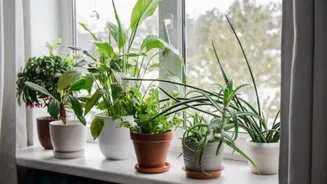
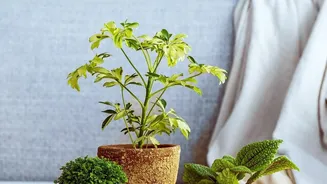
Have you ever noticed your monstera or pothos leaning dramatically towards the window? This isn't just a quirky habit; it's a survival mechanism called phototropism. Plants are powered by photosynthesis, the process of converting light into energy. To
maximize this, they have evolved to physically grow towards the most promising light source. This response is controlled by a growth hormone called auxin, which accumulates on the shaded side of the stem. This concentration of auxin causes the cells on the darker side to elongate faster, effectively bending the plant towards the light. While brilliant for survival, this leads to the lopsided, uneven growth many plant parents try to avoid.
Why a Sudden Spin Causes Stress
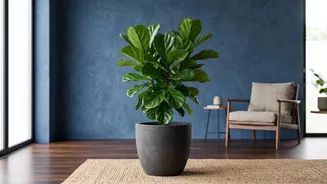
Given a plant's natural lean, the intuitive fix might seem to be a quick 180-degree turn to even things out. However, this abrupt change can be a significant shock to your plant's system. The leaves on the 'dark' side have adapted to lower light conditions. Suddenly exposing them to intense, direct sun can cause them to scorch or yellow. Meanwhile, the leaves that were perfectly positioned to receive sunlight are now cast in shadow, forcing the plant to expend precious energy reorienting itself all over again. This stress can manifest as drooping, stunted growth, or even leaf drop, especially in notoriously fussy plants like the Fiddle Leaf Fig.
The Art of the Gradual Turn
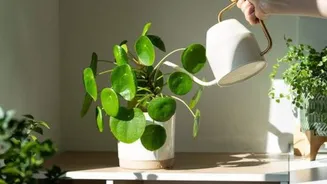
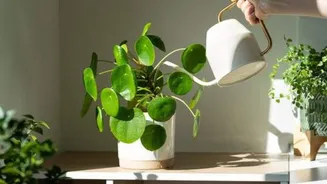
The key to healthy, symmetrical growth is not to stop rotating, but to do it gradually. The most widely recommended method is the quarter-turn. Once a week, or every time you water, simply give the pot a 90-degree turn in the same direction. This gentle, consistent adjustment allows all sides of the plant to receive adequate light over time without causing a system shock. The plant can slowly adjust its leaves and stems, promoting a strong, upright structure instead of a contorted, confused one. This simple habit, which takes only seconds, also provides a regular opportunity to inspect your plant for pests or dust on the leaves, further contributing to its overall health.
Identifying Your Sensitive Plants
While most common houseplants benefit from gradual rotation, some are particularly sensitive to their orientation. The Fiddle Leaf Fig (Ficus lyrata) is famous for being dramatic and may drop leaves if its conditions change suddenly. Other ficus varieties, like the Rubber Tree, also prefer a slow and steady approach. Plants with large, decorative foliage that have a clear 'front' and 'back,' such as climbing Monsteras or Philodendrons, may develop twisted, awkward growth if rotated too frequently, as they are biologically programmed to orient their leaves in one primary direction. Observing your plant is crucial; if it seems stressed after a move, it's likely a candidate for the gradual-turn method.
When You Shouldn't Rotate at All
There are a few instances where you should resist the urge to rotate your plant. The most notable exceptions are certain flowering plants. Species like Orchids and Christmas Cacti (Schlumbergera) expend a great deal of energy to form their buds. If you rotate the plant after it has set buds, it may become stressed by the change in light orientation and drop them before they have a chance to bloom. Once the flowering cycle is complete, you can resume gentle rotation. Similarly, if you have carefully trained a climbing or vining plant onto a specific trellis or support, rotating it would disrupt the arrangement. In these cases, it's better to accept a bit of natural asymmetry.