






A New Eye on Our Star
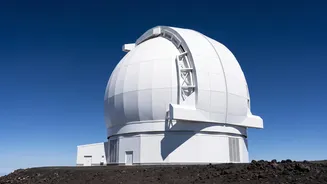
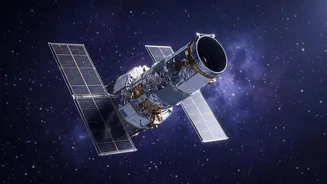
Perched atop Haleakalā in Maui, Hawaii, the Daniel K. Inouye Solar Telescope (DKIST) has a unique mission: to observe our sun in unprecedented detail. As the largest solar telescope in the world, its four-metre primary mirror gives scientists the ability
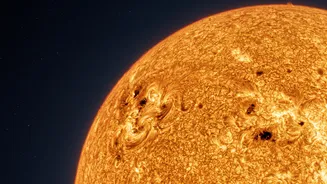
to resolve features on the sun's surface as small as 20 kilometres across. This is a monumental leap in observational power, allowing researchers to see details that were previously too small for other telescopes to detect. The sun's surface, or photosphere, is a turbulent place, a constantly churning sea of hot plasma rising, cooling, and sinking in a process called convection. For decades, this granular pattern was the limit of our vision, but DKIST has peeled back another layer.
What Did the Telescope See?
In images released in August 2026, astronomers revealed the first direct observation of tiny, swirling vortices of plasma at the edges of the sun's granular cells. These whirlpool-like structures, some just 20 to 30 kilometres wide, were long predicted by theoretical models but had never been directly seen. Scientists identified them as a classic phenomenon known as the Kelvin-Helmholtz instability. This effect occurs when two fluids, or in this case plasmas, slide past each other at different speeds, creating a shear that curls into a vortex. Think of the way wind creates waves on the surface of the ocean; a similar principle is at play on the sun, but driven by magnetic fields and superheated gas.
Tiny Whirlpools with Massive Implications
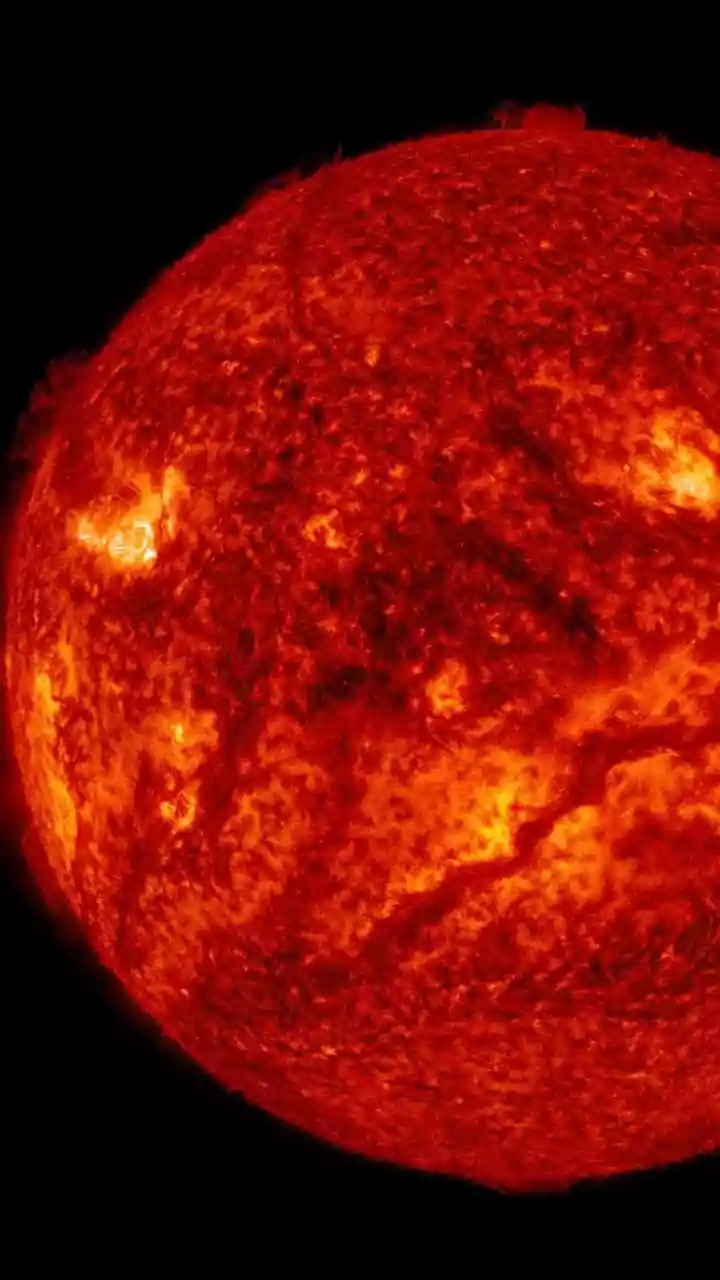
These small swirls are far more than just a visual curiosity; they are believed to be a key mechanism for transporting energy from the sun's churning surface into its upper atmosphere. The vortices twist and braid the magnetic field lines that permeate the sun's surface. This process is like twisting a rubber band—it stores up immense amounts of energy. When these tangled magnetic fields suddenly and explosively realign, that stored energy is released. This discovery provides a new perspective on how the sun builds up magnetic energy, which can then power explosive events like solar flares and coronal mass ejections.
Solving the Coronal Heating Puzzle
One of the longest-standing mysteries in astrophysics is the coronal heating problem. The sun's visible surface is about 6,000 degrees Celsius, yet its outer atmosphere, the corona, sizzles at over a million degrees. This defies logic, as temperatures should cool with distance from a heat source. Scientists have long believed the sun's magnetic field is responsible, but the exact mechanism for transferring the energy has been elusive. These newly discovered vortices may be a crucial part of the answer. By efficiently mixing plasma and tangling magnetic fields, they could provide a steady source of energy that heats the corona from below, potentially through millions of tiny explosions known as nanoflares.
Why It Matters Here on Earth
Understanding the fundamental physics of our sun is not just an academic exercise. The energy released from the sun, known as space weather, has a direct impact on our technologically dependent world. Solar flares and coronal mass ejections can disrupt communication satellites, damage power grids, and pose a risk to astronauts in space. By better understanding the small-scale processes that lead to these large-scale events, scientists hope to improve their models for predicting solar activity. This discovery, born from the highest-resolution images of the sun ever taken, provides a vital new piece of that puzzle, ultimately helping us safeguard our infrastructure on Earth and in orbit.