

The Science of Simple Ingredients
The magic of this mask lies in its dual-action approach. It combines gentle physical exfoliation with mild chemical exfoliation, all from two pantry staples. Oatmeal, long praised for its calming properties, works as the physical component. When finely
ground, its particles gently buff away dead skin cells, dirt, and excess oil without the harshness of many commercial scrubs. It contains natural cleansers called saponins that help purify pores, as well as beta-glucans, which form a protective layer on the skin to lock in moisture and reduce redness.
Yoghurt's Gentle Exfoliating Power
Yoghurt provides the chemical exfoliation, thanks to its natural lactic acid content. Lactic acid is an alpha-hydroxy acid (AHA) known for being one of the mildest chemical exfoliants. It works by dissolving the 'glue' that holds dead skin cells to the surface, encouraging cell turnover and revealing the fresher, smoother skin underneath. Beyond exfoliation, the fats in yoghurt help to moisturize, while its probiotics can assist in calming inflammation and supporting a healthy skin barrier.
How to Make Your Two-Ingredient Mask
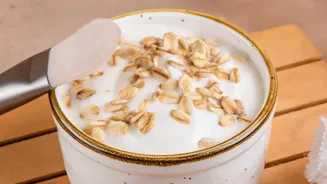
Creating this skin-softening mask is incredibly simple. For a single application, you will need just two ingredients. For the best results, use plain, full-fat Greek yoghurt, as its thick consistency makes for easier application and it is rich in skin-friendly fats and probiotics. For the oatmeal, rolled oats that have been ground into a fine powder work best. You can use a coffee grinder or blender for this. Your simple recipe is: - 2 tablespoons of plain, full-fat yoghurt - 1 tablespoon of finely ground oatmeal In a small bowl, mix the ground oatmeal and yoghurt together until you form a smooth, consistent paste. If the mixture feels too thick, you can add a tiny bit more yoghurt. If it’s too runny, a little more oatmeal will help it thicken. Let the mixture sit for a few minutes to allow the oatmeal to soften and absorb some of the moisture.
Application for Maximum Glow
To get the most out of your mask, start with a clean, dry face. Using your fingertips or a clean brush, apply a thin, even layer of the paste over your face and neck, avoiding the delicate eye area. Let the mask sit for 10 to 15 minutes. Unlike a clay mask, it won't dry out completely but will feel slightly tacky. To remove, use a washcloth soaked in warm water. Gently wipe the mask away in small, circular motions. This final step provides another light touch of physical exfoliation from both the oatmeal and the cloth, helping to lift away all the dead skin cells loosened by the lactic acid. Pat your skin dry and follow up with your favorite moisturizer to seal in the hydration.
Who Can Benefit and When to Be Cautious
This mask is particularly beneficial for those with dull, dry, or combination skin, as it both exfoliates and hydrates. Its anti-inflammatory properties also make it a soothing option for skin prone to redness or irritation. However, if you have a known dairy allergy, you should avoid this mask. For those with very sensitive skin, it's always wise to perform a patch test on a small area, like behind your ear or on your inner arm, before applying it to your entire face. This ensures your skin reacts well to the ingredients. You can safely use this gentle mask up to twice a week to maintain a smooth and radiant complexion.