






A Disastrous Collapse, A Clear Link
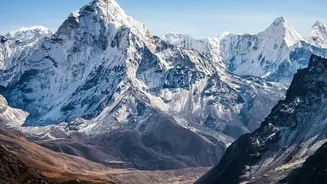
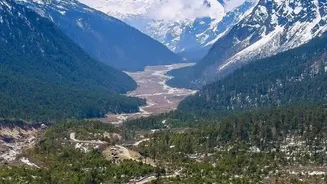
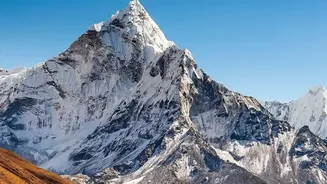
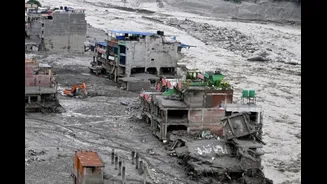
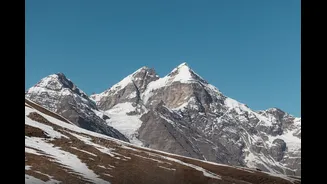
In late August 2026, a massive section of rock and glacier ice collapsed from Mount Langtang Lirung on the Nepal-Tibet border, triggering a catastrophic flood. A rapid attribution study by the World Weather Attribution group, an international team of scientists,
concluded that climate change was a likely contributing factor that “preconditioned” the mountain slope for failure. The analysis found that decades of atmospheric heating have thinned glaciers and thawed permafrost—the frozen soil that acts as a mountain's glue. This long-term warming destabilized the slope, setting the stage for the collapse that sent an avalanche of rock and ice into the valley below, unleashing a torrent of water and debris at immense speeds.
The Science of a 'Cascading Crisis'
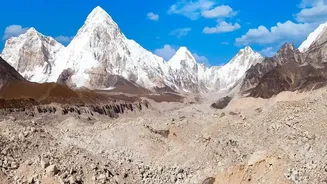
Researchers describe the event not as a simple flood, but as a compound or cascading crisis. The process began with long-term warming; the region has warmed by about 2°C since pre-industrial times, far above the global average. This steady heat thaws the permafrost and shrinks glaciers, which removes the icy buttresses that support adjoining rock walls. The months leading up to the disaster, July and August 2026, were the warmest on record locally, adding acute stress through excessive meltwater. More rain is also falling at high elevations where it once only snowed, further lubricating deep fractures in the rock. While a major 2015 earthquake may have also weakened the bedrock, scientists state that the multiple climatic factors made worse by global warming played a critical role.
A Threat from Above: Glacial Lake Outbursts
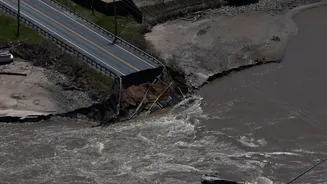
This disaster is a stark example of a threat looming over the entire Himalayan region: Glacial Lake Outburst Floods, or GLOFs. As glaciers melt at an accelerating rate, the water pools behind natural dams made of moraine—loose rock and soil. These dams are often unstable and can burst without warning from triggers like an avalanche, an earthquake, or simply the pressure of the growing lake. The result is a sudden, high-velocity flood that carries immense destructive power, wiping out villages, roads, and vital infrastructure like hydropower plants. Recent events have shown that even small, rapidly forming lakes, which are harder to monitor, can cause devastating GLOFs, demonstrating a risk that is both growing and evolving.
The Human Cost on the Front Lines
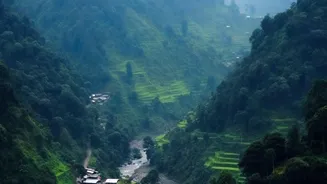
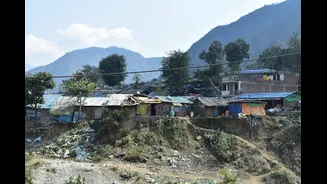
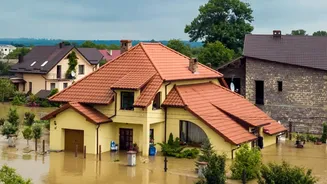
For Nepal, a nation that has contributed negligibly to global greenhouse gas emissions, the consequences are catastrophic. The August 2026 disaster alone killed over a thousand people, with thousands more missing and billions of dollars in economic damage. The human cost extends beyond the immediate loss of life. Floods destroy agricultural land, displace entire communities, and increase the risk of exploitation as people lose their livelihoods and are forced to migrate. Nepal's complex topography and high population density in river valleys make it exceptionally vulnerable. The disaster has highlighted that for communities on the front lines, the limits of adaptation are already being reached; the speed and scale of the collapse overwhelmed existing early warning systems.