


1. The Golden Temple (Harmandir Sahib)
The spiritual anchor of Sikhism, the Golden Temple, is a breathtaking sight, appearing to float on the sacred waters of the Amrit Sarovar. Its golden dome gleams, but its true beauty lies in its message of equality and selfless service. Join the thousands
of devotees, listen to the continuous Gurbani Kirtan (hymns), and witness the remarkable Langar, a community kitchen serving free meals to over 100,000 people daily, run entirely by volunteers. This experience is a profound lesson in humility and community.
2. Jallianwala Bagh
A short walk from the Golden Temple, this public garden is a solemn memorial to a tragic chapter in India's freedom struggle. On April 13, 1919, British troops fired on a peaceful gathering, killing hundreds of unarmed Indians. Today, the memorial preserves the bullet-marked walls and the Martyrs' Well, where many jumped to escape the gunfire. A visit here is a powerful and heart-wrenching reminder of the price paid for freedom.
3. The Wagah Border Ceremony
Every evening before sunset, the India-Pakistan border at Attari-Wagah comes alive with a high-energy military ceremony. The 'Beating Retreat' involves perfectly synchronised marching, high kicks, and patriotic songs from both the Indian Border Security Force and the Pakistan Rangers. The atmosphere is electric with national pride, culminating in the coordinated lowering of both nations' flags. It's a spectacle of organised rivalry and a must-see for any visitor.
4. The Partition Museum
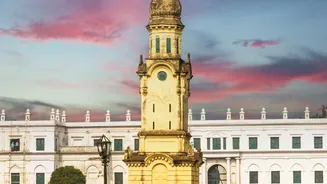
Housed in the historic Town Hall, this museum is the world's first institution dedicated to the human stories of the 1947 Partition of India. It chronicles the trauma and upheaval of the largest mass migration in history through oral histories, personal artefacts, letters, and photographs. It is an emotional and educational journey that provides deep insight into an event that shaped modern India and Pakistan.
5. A Culinary Pilgrimage
Amritsar’s story is also told through its food. No visit is complete without savouring Amritsari Kulcha—a crispy, butter-laden flatbread stuffed with potatoes and spices. Wash it down with a tall glass of creamy Lassi from a century-old joint like Ahuja Milk Bhandar. From the famous dal at Kesar da Dhaba to sweet, syrupy Jalebis, the city's dhabas and street food stalls offer a taste of Punjab's rich agricultural heritage.
6. Shopping at Hall Bazaar
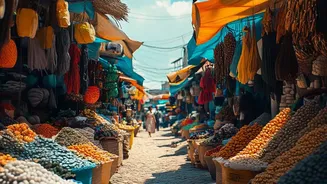
One of the city's oldest and busiest markets, Hall Bazaar is a vibrant maze of shops located near the Golden Temple. It's the perfect place to find traditional Punjabi crafts, especially the famous Phulkari embroidery on dupattas and suits. You can also shop for colourful juttis (traditional footwear), handicrafts, and local textiles. The market itself, with its historic Gandhi Gate entrance, is an experience in Amritsar's bustling commercial life.
7. Experience Village Life at Sadda Pind
Step back in time at Sadda Pind, a living museum that recreates a traditional Punjabi village. Spread over 12 acres, it offers an immersive experience with mud houses, folk performances like Bhangra and Giddha, and artisans at work. You can try your hand at pottery, watch a Gatka (Sikh martial art) performance, and savour authentic Punjabi cuisine. It’s a fun, interactive way to connect with the region's rural roots.
8. Explore Gobindgarh Fort
This magnificent fort stands as a symbol of Punjab's resilience and martial history. Originally a mud fortress from the 18th century, it was later fortified by Maharaja Ranjit Singh. Spread across 43 acres, the fort now houses museums, live performances, and exhibits showcasing Sikh military history, including a 7D show on the Maharaja's life. It offers a fascinating glimpse into the city's past as a strategic stronghold.
9. Find Serenity at Durgiana Temple
Often called the Silver Temple for its intricately carved silver doors, the Durgiana Temple is a premier Hindu shrine dedicated to Goddess Durga. Its architecture bears a striking resemblance to the Golden Temple, complete with a sacred sarovar surrounding the main shrine. Built in 1921, it offers a peaceful and less crowded spiritual atmosphere, reflecting the harmonious coexistence of faiths in the holy city.
10. Connect with Mythology at Ram Tirath Ashram
Believed to be the ancient hermitage of the sage Valmiki, this sacred site holds immense significance in the epic Ramayana. It is said to be the place where Sita found shelter after being exiled and gave birth to her twin sons, Luv and Kush. The complex features a number of temples and a large sacred tank. A visit here connects you to an ancient layer of Amritsar's spiritual identity, long predating its modern history.