




Grains of Place: A Story of Adaptation
India's food traditions are a direct reflection of its geography. While the fertile plains of the north became the cradle of wheat and the water-rich deltas of the south and east nurtured rice, vast stretches of the country presented a different challenge:
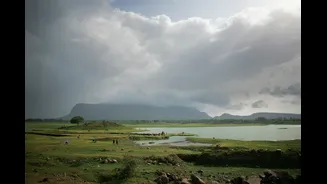
arid, semi-arid, and rain-fed conditions where these staples couldn't thrive. This is where millets—a diverse group of small-seeded grasses—became the heroes of the Indian diet. Grains like pearl millet (bajra), sorghum (jowar), and finger millet (ragi) are not just ingredients; they are emblems of resilience, perfectly adapted to their environments. These crops require less water, tolerate high temperatures, and grow in poor soils, making them a lifeline for farming communities for thousands of years.
Bajra: The Heartbeat of the Arid West
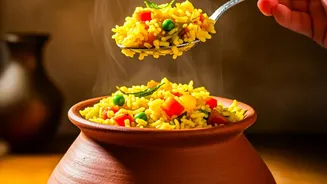
In the sun-scorched landscapes of Rajasthan and Gujarat, where rainfall is sparse and heat is intense, pearl millet, or bajra, reigns supreme. This drought-resistant grain is the backbone of the local cuisine, providing sustenance through harsh conditions. The most iconic preparation is the bajra roti, or 'sogra', a rustic, unleavened flatbread. Its dense texture and earthy flavour are traditionally paired with a dollop of ghee and spicy curries. Another staple is bajra khichdi, a comforting, one-pot meal made by pressure-cooking whole bajra with lentils. These dishes are designed to provide slow-release energy, ideal for the demanding rural lifestyle and a climate that requires a hardy diet. During hot weather, a fermented porridge called 'raabdi' is consumed for its cooling properties.
Jowar: The Staple of the Deccan Plateau
Travel to the Deccan Plateau, encompassing large parts of Maharashtra and Karnataka, and the culinary landscape shifts to sorghum, or jowar. This region's semi-arid climate and clayey soil are ideal for cultivating this grain. Here, the quintessential dish is the jowar bhakri, a soft, white flatbread that is a daily staple in millions of households. It serves as the perfect canvas for the region's robust vegetable and meat curries. Jowar's cultivation is so central to this region that Maharashtra is the country's leading producer. The grain's adaptability makes it a crucial crop for both food and animal fodder, underpinning the rural economy and providing food security in areas with unpredictable rainfall.
Ragi: The Southern Powerhouse
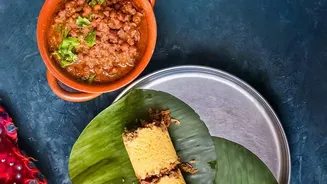
In the southern states, particularly Karnataka, ragi, or finger millet, is a cherished part of the culinary heritage. Thriving in warm climates and rain-fed conditions, ragi is celebrated for its exceptional nutritional profile, being rich in calcium and protein. The most emblematic ragi dish is the 'ragi mudde', a steamed ball of cooked ragi flour. Traditionally eaten with a spicy sambar or curry, this dish is a symbol of the region's agricultural identity and was the go-to meal for farmers needing long-lasting energy. Ragi's versatility is also seen in other preparations like the cooling summer porridge known as ragi ambali, and modern adaptations such as dosas and rotis, showcasing how this ancient grain fits into contemporary diets.
A Return to the Roots
For a period, the Green Revolution's focus on high-yield wheat and rice pushed these traditional grains to the background, often branding them as 'poor man's food'. However, a powerful revival is underway. With growing awareness of health and sustainability, millets are being celebrated once again. Their natural gluten-free properties, high fibre content, and low glycemic index appeal to modern health-conscious consumers. More importantly, in an era of climate change and increasing water scarcity, these climate-resilient crops are being recognized as 'nutri-cereals' that hold the key to a more sustainable and secure food future. The rediscovery of these grains is not just a food trend; it's a return to ancestral wisdom that perfectly balances nutrition, culture, and ecology.