







From a University Lab to the Launchpad
Born from an idea at the Indian Institute of Technology, Madras, Agnikul Cosmos has rapidly emerged as a key player in India’s burgeoning space-tech sector. The company made headlines in May 2024 with the successful launch of its Agnibaan SOrTeD (SubOrbital
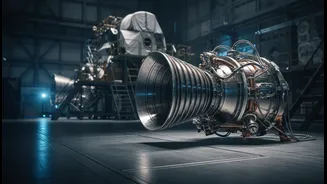
Technological Demonstrator). This was no ordinary test flight. It was the first time a rocket powered by a single-piece, 3D-printed, semi-cryogenic engine was successfully flown anywhere in the world. The engine, named Agnilet, was designed and built entirely in-house, proving the company's innovative manufacturing capabilities. The SOrTeD mission, launched from India’s first private launchpad, demonstrated that Agnikul's core technologies were ready for the next giant leap: an orbital mission with an even bolder objective.
The Goal: A Controlled Ocean Recovery
Agnikul's upcoming Mission-02 is where the headline-making ambition truly lies. The primary goal is to attempt the recovery of the Agnibaan rocket's first stage after it completes its burn and separates from the upper stage. The plan involves guiding the booster through a controlled descent into the ocean for retrieval. This complex manoeuvre, known as an ocean recovery, is a critical first step towards full reusability. While it may not be the dramatic land-based touchdowns popularised by SpaceX, it is a proven method for testing and perfecting the difficult physics of bringing a rocket stage back to Earth safely. If successful, it would mark the first time a private Indian company has recovered a stage from an orbital-class rocket, a significant engineering milestone for the nation's commercial space efforts.
A Different Path from ISRO
The claim of this being a “first of its kind in India” is important. The Indian Space Research Organisation (ISRO) has its own highly advanced reusable launch vehicle program, the RLV-TD. However, ISRO’s approach involves developing a winged vehicle that lands on a runway, much like an aircraft. Agnikul is pursuing a different technological path focused on the vertical recovery of a conventional rocket booster, a method that has become the commercial standard globally. This makes their attempt a distinct and parallel effort in India’s journey toward reusability. Underscoring the significance of this private-sector push, former ISRO Chairman Dr. S. Somanath, who oversaw the historic Chandrayaan-3 Moon landing, recently joined Agnikul's board as an observer, lending immense credibility to its technical strategy.
More Than Just Bringing It Back
Beyond just recovering the booster, Mission-02 has another trick up its sleeve. Agnikul plans to demonstrate a unique capability for its upper stage—the part of the rocket that carries the satellite into its final orbit. Instead of letting this stage become space debris after its primary job is done, the company aims to keep it functional as an in-orbit platform. This concept, which Agnikul has patented, could allow the spent stage to host small experiments or test new technologies, effectively turning a piece of space junk into a valuable asset. This dual-pronged approach of booster recovery and upper-stage utility showcases a deep commitment to sustainable and efficient space operations.
The Economics of Coming Home
Ultimately, the pursuit of reusability is driven by economics. Throwing away a multi-million-dollar rocket after a single use is incredibly expensive. Global pioneers like SpaceX have shown that recovering and reusing rocket boosters can slash launch costs by up to 80 percent. This cost reduction has fundamentally changed the space industry, making it possible to launch large satellite constellations and undertake more ambitious missions. By aiming for reusability, Agnikul is positioning itself to compete in the fierce global market for small satellite launches. For India, a successful private effort would not only complement ISRO's capabilities but also signal to the world that its private space industry is ready to offer cost-effective and reliable launch services, capturing a larger share of the trillion-dollar global space economy.