







Beyond the Six-Pack
When people talk about the 'core', they are often just thinking of the rectus abdominis—the 'six-pack' muscle at the front of the stomach. But your true core is a complex group of muscles that acts as a 360-degree support system for your trunk. This muscular
corset includes deep abdominal muscles like the transverse abdominis, muscles along your spine (erector spinae, multifidus), your obliques on the sides, the diaphragm, pelvic floor muscles, and even your glutes and hip stabilisers. These muscles work together to stabilise your spine, pelvis, and hips, creating a solid base for nearly every movement you make, from standing up to lifting groceries.
The Real-World Benefits
A strong core does more than just help you look toned. It is essential for overall health and function. One of the most significant benefits is the prevention and reduction of lower back pain. When your core is weak, other muscles, particularly in your lower back, have to overcompensate, leading to strain, poor posture, and increased stress on your spine. A strong core acts like an internal brace, supporting your spine, improving posture, and ensuring forces are distributed evenly throughout the body. This leads to better balance, coordination, and stability, which reduces your risk of falls and injuries. It also enhances athletic performance, as your core is the bridge that transfers power from your lower body to your upper body.
Technique Is Everything
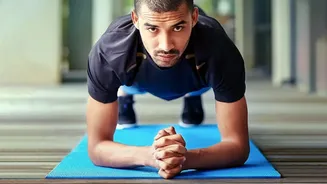
Simply going through the motions of a core exercise is not enough; poor form can be ineffective and even lead to injury. The goal is to engage the correct muscles, not just the superficial ones. For instance, in a plank, a common mistake is letting the hips sag or arching the lower back, which transfers stress to the spine instead of working the core. Proper form involves keeping a neutral spine, engaging your glutes, and actively bracing your abdomen as if you are about to be punched in the stomach. Another common error is holding your breath. Proper breathing, particularly exhaling on exertion, helps to engage the deepest core muscles, including the transverse abdominis and pelvic floor. Focusing on quality of movement over quantity of repetitions will always yield better results and protect you from injury.
Common Mistakes to Avoid
Many common training habits can sabotage your progress. One major mistake is focusing solely on flexion exercises like crunches and sit-ups. These primarily target the rectus abdominis and can lead to muscular imbalances and stress on the lumbar spine if overdone. A balanced routine should include exercises that resist motion, such as planks (anti-extension), side planks (anti-lateral flexion), and Pallof presses (anti-rotation). Another pitfall is training your core every single day. Like any other muscle group, your abs need time to rest and recover to grow stronger. Overtraining can lead to fatigue and plateaus. Finally, never sacrifice form for more repetitions or longer holds; it's more effective to hold a perfect plank for 20 seconds than a sloppy one for a minute.
Finding the Right Rhythm
So, how often should you practice? Most experts agree that for the majority of people, targeting the core with specific exercises 2 to 4 times per week is an effective frequency. This provides enough stimulus for the muscles to adapt and strengthen, while also allowing for adequate recovery time, which is typically 48 to 72 hours between intense sessions. Consistency is more important than intensity in the beginning. It is better to do three well-executed 15-minute sessions each week than to do one gruelling hour-long workout and then be too sore to move. For those new to core training, starting with 1-2 sessions per week is sufficient to build a foundation. Remember that your core also gets worked indirectly during compound exercises like squats, deadlifts, and overhead presses, so it's important to consider your overall training schedule.