The High-Speed Vision
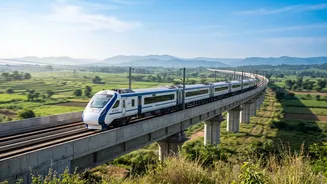
The Delhi-Varanasi High-Speed Rail (DVHSR) is one of India's most ambitious upcoming infrastructure projects. As the second bullet train corridor planned after the Mumbai-Ahmedabad line, it aims to connect the national capital with the spiritual heart
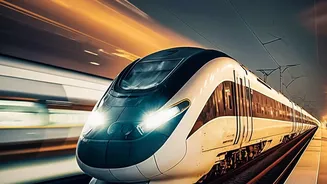
of the country across an approximately 865-kilometre route. Managed by the National High Speed Rail Corporation Limited (NHSRCL), the project envisions trains running at an operating speed of around 320 km/h, with a maximum speed of 350 km/h. This initiative is part of a larger government plan to develop seven new high-speed corridors, positioning them as 'growth connectors' to foster economic development and sustainable transport. The Delhi-Varanasi line is considered a priority project, intended to connect major political, tourism, and religious hubs across Uttar Pradesh.
Addressing the Four-Hour Question
So, is a four-hour journey really on the cards? According to official planning estimates, the travel time for a limited-stop service between Delhi and Varanasi will be approximately three hours and 50 minutes. This is a dramatic reduction from the current fastest train, the Vande Bharat Express, which takes about eight hours to cover the distance. Other trains can take anywhere from 11 to 15 hours. The bullet train's speed would make the journey competitive with air travel, especially when factoring in the time spent on airport check-ins and travel to and from airports, which are often located far from city centres. The high-speed rail stations, in contrast, are planned for better integration within urban areas.
The Proposed Route and Key Stations
The corridor is planned to start from Sarai Kale Khan in Delhi and will traverse through the heart of Uttar Pradesh, connecting several key cities. The proposed route includes around 12 to 13 stations, including Noida, the upcoming Noida International Airport at Jewar, Mathura, Agra, Lucknow, Rae Bareli, Prayagraj, and finally Varanasi. This strategic alignment places some of North India's most significant cultural and religious landmarks on a single high-speed axis. Tourists and pilgrims will have faster access to the Taj Mahal in Agra, the holy sites of Mathura, the Sangam in Prayagraj, and the ghats of Varanasi. Furthermore, a spur line connecting Lucknow to Ayodhya is also part of the plan, which would bring the city of the Ram Temple into the high-speed network.
When Can You Expect to Travel?
While the prospect is exciting, it's important to have realistic expectations regarding the timeline. The Delhi-Varanasi corridor is currently in the advanced planning stages. The Detailed Project Report (DPR) was submitted in 2020, and extensive work, including LiDAR aerial surveys and alignment finalisation, has been completed. It was officially announced as one of seven new high-speed corridors in the Union Budget for 2026-27. However, construction has not yet begun. The project still requires final approvals and the arrangement of its complex financing model. Indicative timelines suggest potential operations could begin around 2031, but this remains a target and is subject to land acquisition and construction schedules.
Transforming Regional Connectivity
The impact of this corridor extends beyond just reducing travel time. It is expected to provide a significant boost to regional economies, tourism, and business travel. The link to the Noida International Airport at Jewar will create a powerful multi-modal transport hub, allowing air passengers to seamlessly connect to the high-speed rail network for onward journeys. The project is also seen as a crucial step in extending high-speed rail into India's populous heartland, potentially creating an economic belt stretching from Delhi across Uttar Pradesh. In the long term, there are even plans to extend the corridor from Varanasi to Patna and Siliguri in West Bengal, creating an even larger network connecting North and East India.