






A Sobering Global Assessment
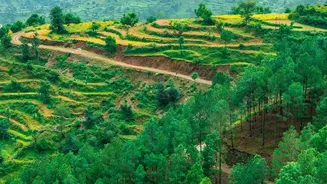
The UN’s Food and Agriculture Organization (FAO) recently released its flagship ‘State of the World’s Forests 2026’ report, and the findings are grim. The world has lost an estimated 489 million hectares of forest since 1990 — an area larger than the entire
European Union. On top of this, more than 460 million hectares of forest land are considered degraded. In response, nations have pledged to restore vast areas, with 91 countries committing to restoring about 190 million hectares. However, the report makes it clear that progress is dangerously slow. The window for meaningful action is narrowing, and failure to act risks locking landscapes into a spiral of decline.
The Financial Imbalance
To understand why this restoration gap is growing, we need to follow the money. An accompanying UN Environment Programme (UNEP) report, ‘State of Finance for Nature 2026’, provides a shocking explanation. For every dollar the world invests in protecting or restoring nature, thirty dollars are spent on activities that actively destroy it. In 2023, investments in nature-based solutions totalled about $220 billion. In stark contrast, a staggering $7.3 trillion flowed into “nature-negative” activities, such as harmful agricultural subsidies, fossil fuels, and other high-impact sectors. This massive financial discrepancy is the engine driving the restoration deficit; we are overwhelmingly financing destruction while underfunding the cure.
Why Restoration Projects Fail
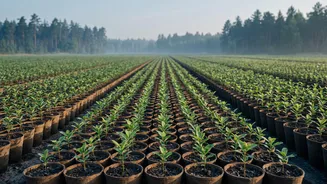
The problem isn't just a lack of funds. Many restoration projects are doomed from the start due to poor planning and execution. A major obstacle is the failure to involve local communities. When the needs and goals of people who live on and depend on the land are ignored, projects lack the local support needed to protect and manage the restored areas. Other significant barriers include a lack of access to quality seeds and saplings, insufficient technical training, and conflicting government policies that continue to incentivise deforestation for agriculture and urban expansion. Unless restoration is integrated into the social and economic fabric of a region, simply planting trees is not enough.
The Real-World Consequences
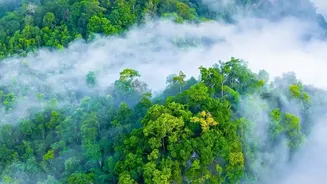
The failure to restore forests is not just a missed environmental target; it carries devastating real-world costs. Forests are home to 80% of the world’s land-based species, and their destruction drives biodiversity loss and extinction. Without trees to anchor fertile ground, soil erosion accelerates, jeopardizing agriculture. The economic toll is immense, with the failure to restore degraded ecosystems costing the global economy between $878 billion and $6.3 trillion every year. Furthermore, nearly a third of the global population depends on forests for their livelihoods, food, and income. For these communities, the restoration gap translates directly into increased poverty and instability.
Is There a Path Forward?
The UN reports stress that while the situation is critical, it is not hopeless. The key is a fundamental shift in our approach. The first step is to redirect the trillions of dollars flowing into nature-negative activities. Phasing out harmful subsidies and investments could, on its own, close the funding gap. Success also requires empowering local and Indigenous communities, giving them secure land rights and a central role in restoration governance. Finally, policies must become coherent, ensuring that actions in one sector, like agriculture or energy, do not undermine restoration goals in another. The reports argue that investing in restoration is not a cost but a high-return investment, generating up to $30 in benefits for every dollar spent.